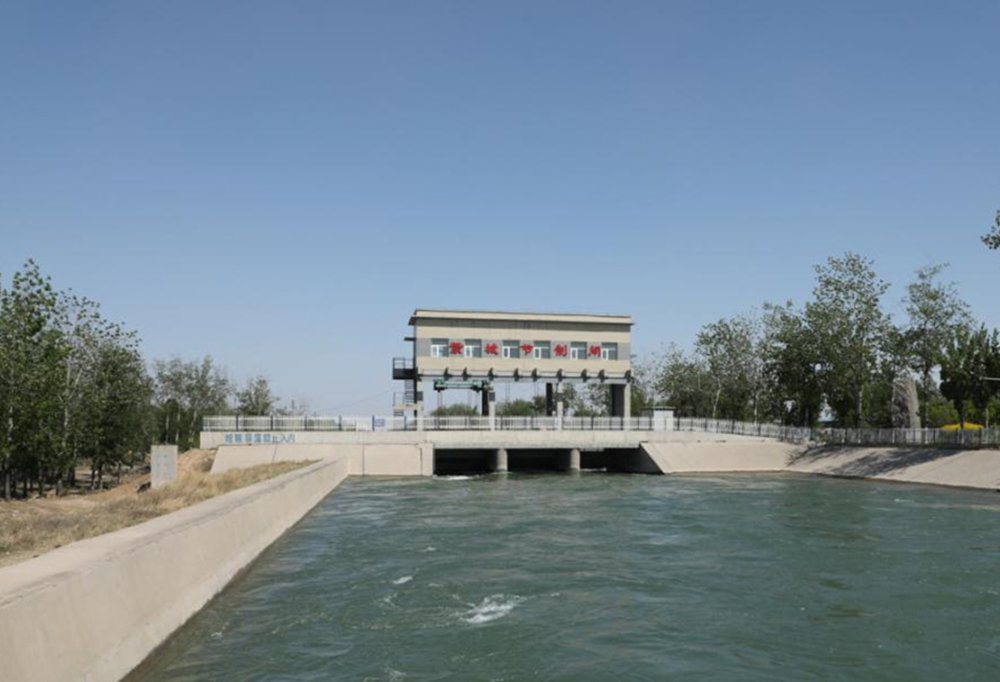
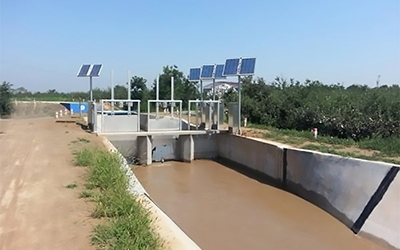
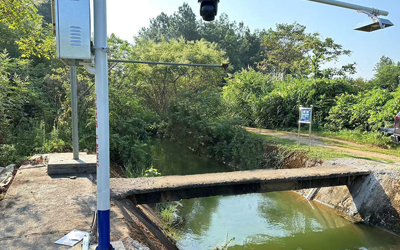
I. Project Background When the flood season arrives, reservoirs under the pressure of heavy rainfall are at risk of releasing water at any time. Every time a reservoir discharges floodwater, downstream responsible units organize personnel to patrol the downstream river channels after receiving the flood discharge notice. This process consumes significant human and material resources, while the effect of information transmission is unsatisfactory.
The traditional patrol methods are outdated and simplistic, with slow information transmission speed and limited coverage. They fail to deliver flood discharge information to towns, streets, and most administrative villages along the route in a timely manner, resulting in blind spots in the inspection of flood discharge channels and posing threats to the lives and property of people in downstream areas. In recent years, some casualties caused by floods have been associated with emergency flood discharge from reservoirs.
To strengthen the safety management of areas affected by flood discharge and water release downstream of reservoirs, improve the early warning work for reservoir flood discharge and water release, ensure the safe and orderly implementation of flood discharge and water release, and protect the lives and property of people in affected areas, it is necessary to enhance publicity and raise public awareness of early warnings. Warning signs and early warning broadcast systems will be installed near each residential area along the river, as well as at bridges, intersections, ferries, and floodplains on both banks. This combined approach will quickly, timely, and accurately disseminate flood discharge information to the public, expand the coverage of flood discharge early warning information, improve flood discharge early warning capabilities, and minimize casualties and economic losses to the greatest extent. II. System Overview Due to the urgency of flood discharge and the scattered distribution of residents in mountainous areas, village cadres find it difficult to notify every household door-to-door. It is also challenging to send a large number of flood discharge early warning text messages through mass messaging platforms in a short period. Additionally, many residents in riverside villages are left-behind elderly and children—some have no mobile phones at all, while others are illiterate or unable to understand text messages.
Wireless broadcasting can significantly improve the effectiveness and coverage of notifications, allowing downstream residents to be informed at the fastest speed. Addressing the shortcomings of traditional wired broadcasting (such as high difficulty in cable laying, high project costs, difficulty in on-site power supply, and high daily maintenance costs), our company has developed a "Beidou + 2G/3G/4G Early Warning Broadcasting System" (referred to as the "Wireless Early Warning Broadcasting System" for short) in accordance with national guiding documents on mountain flood disaster early warning.
The central platform of the Wireless Early Warning Broadcasting System is located in the command center. It uses wireless communication methods such as Beidou + GSM/2G/3G/4G to transmit broadcast signals and control signals. For remote stations in individual areas with weak mobile public network signals, FM broadcasting/Beidou communication is deployed to make up for the signal gap, achieving full coverage of wireless early warning broadcast signals without the need to lay broadcast signal transmission lines.
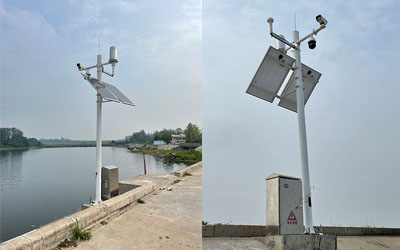
The power supply for remote broadcasting station equipment comes from solar panels, wind turbines, and storage batteries, eliminating the need for external power connections and facilitating operation and maintenance. The central platform can monitor the status of all system equipment in real time, featuring a high level of automation.
Meanwhile, to prevent emergency flood discharge caused by geological hazards such as landslides, additional landslide monitoring stations will be installed upstream of the reservoir. These stations collect data on mountain displacement, deep displacement, soil moisture content, and other factors to provide a decision-making basis for emergency situations. When reservoir sluices need to be opened for flood discharge due to continuous rainfall, the reservoir exceeding the warning water level, or other reasons, supervision departments and village-level flood control responsible persons will release emergency early warning information to local residents through high-power loudspeakers. The information can be sent via mobile/fixed phones, text messages, on-site microphones, walkie-talkies, or pre-recorded broadcasts, notifying relevant villagers to prepare for prevention and evacuation and reducing losses. III. System Architecture
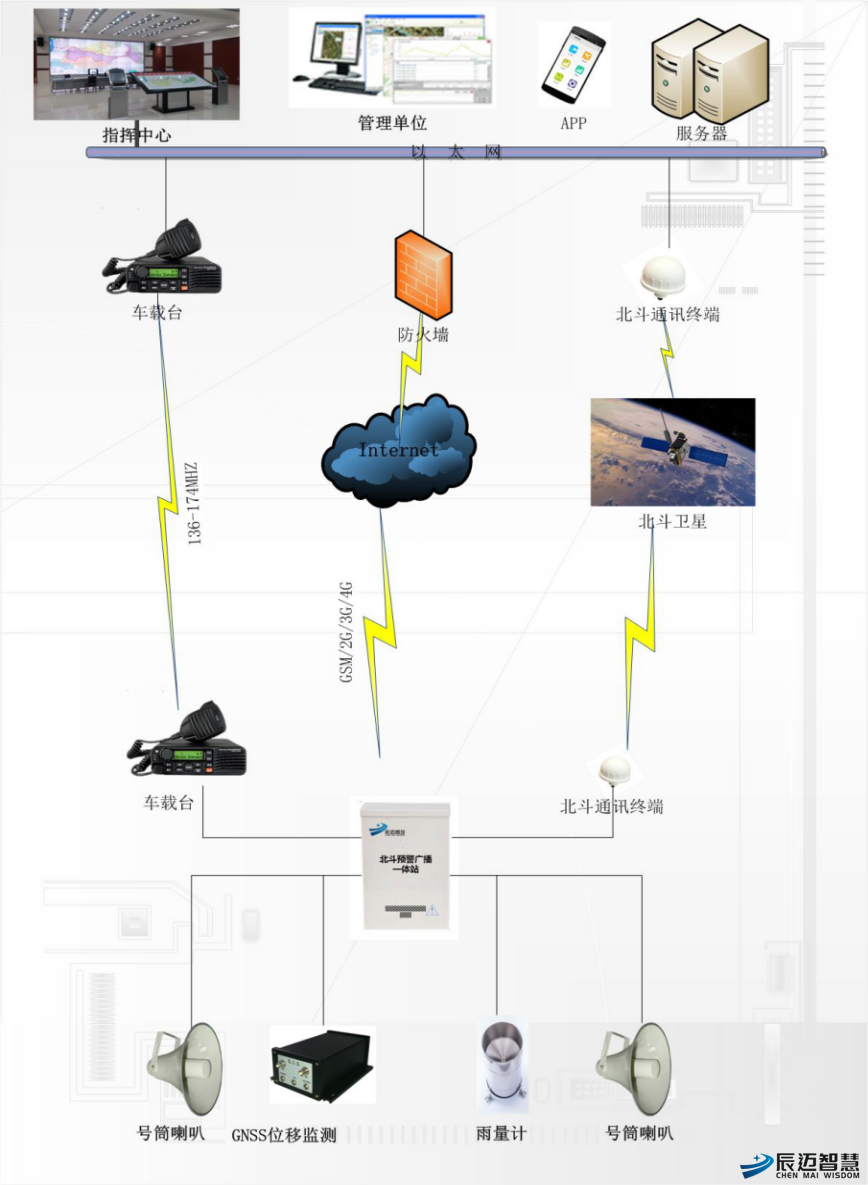
Collection terminals gather data from various sensors (e.g., rainfall, deep displacement, soil moisture content, surface inclinometer, and image sensors). The collected data is transmitted to the central platform via 2G/3G/4G, Beidou satellites, VHF, and other communication methods. Thresholds can be configured for the terminals; when these thresholds are reached, the collection terminals send alarm information to the platform and simultaneously deliver early warning messages to on-duty/management personnel via text messages. The management/on-duty personnel then handle the alarm situation based on the circumstances.
It provides services including remote call early warning (supporting both mobile phones and landlines), SMS-to-voice early warning, platform data-to-voice early warning, vehicle-mounted station/FM radio network early warning, Beidou early warning, local walkie-talkie wireless early warning, local microphone intercom early warning, one-click early warning, MP3 audio early warning, and audio line input early warning.
Supports data and voice communication over GPRS/GSM networks, and is compatible with PPP, TCP/IP, and UDP protocol stacks.
Supports local microphone alarms and on-site command and dispatch.
Supports receiving and playing early warning information via local 87–108MHz FM radio signals.
Supports receiving and playing early warning information via Beidou data.
Supports SMS alarms, remote SMS parameter configuration, and device parameter query.
Supports audio line input for easy connection to third-party audio devices.
Supports whitelist mode.
Supports one-click early warning function.
Supports device status reporting.
Supports remote configuration and software upgrading.
Supports audio recording for evidence collection.
Supports anti-theft alarm function.
Multiple Early Warning MethodsBuilt-in 10 early warning methods covering all warning approaches. These diverse options allow management personnel to flexibly and promptly release early warning information to the public through multiple channels, fully leveraging the value of the early warning system.
Convenient Remote ManagementEquipped with both B/S and C/S platforms. As long as there is internet access, early warning information can be released from any location. Remote configuration of devices and software upgrades can be easily performed via the central platform without on-site operations.
Flexible Early Warning Task SettingTargeted early warning information can be released based on the characteristics of dangerous situations. On the B/S or C/S platform, users can directly select the areas and devices for early warning. Warning devices can operate independently or in batches for simultaneous early warning, ensuring flexibility and efficiency.
Automatic Information Reporting to Improve EfficiencyDevice status information (including working mode, speaker status, chassis status, power supply mode, battery status, and power level) is automatically reported to the platform or mobile phones. This enables real-time monitoring of device status and significantly improves management efficiency.
Group Management for Flexibility and ConvenienceEarly warning broadcasting devices can be grouped according to management needs (with no limit on the number of devices per group). Group-based management supports batch configuration of devices, batch query, and control of device working status.
Sound Pickup Monitoring for Timeliness and AccuracyThe speaker volume status (four levels: high, medium, low, and none) is automatically transmitted back to the platform. This allows real-time monitoring of the early warning equipment’s working status, ensuring timely and effective dissemination of early warning information.
On-Site Recording for Easy Evidence CollectionThe system automatically records audio during broadcasts, and the broadcast content is stored in a USB drive for easy evidence retrieval and use in the future.
Anti-Theft Alarm for Safety and ReliabilityIf the chassis door of a broadcasting station is opened or the speaker is stolen, the device proactively sends an alarm message to the central platform.
Support for Dialect BroadcastingBroadcasts are delivered in Mandarin first, followed by the local dialect in a fixed sequence.
Support for System LinkageIt can be connected to other systems (e.g., rainfall stations, water level stations, and video monitoring systems) for linkage. This enables automatic triggering of preset content for broadcasting or audio-visual alarms.
Multiple Power Supply Options for Reliable OperationThe device supports 220V municipal power supply and DC power supply via storage batteries, with automatic and seamless switching between main and backup power sources for safety and stability. On-site wind-solar hybrid power supply ensures continuous and stable operation of the device.
Role-Based Permissions for Independence and ReliabilityThree user roles are available: administrator, authorized personnel, and backup contact. Up to 70 phone numbers can be set for each role. This ensures that authorized users can legally access the approved functions, while unauthorized users are blocked, guaranteeing the security of early warning information release.