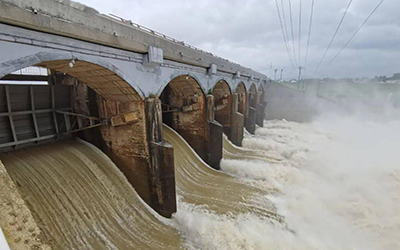
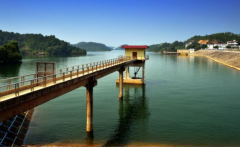
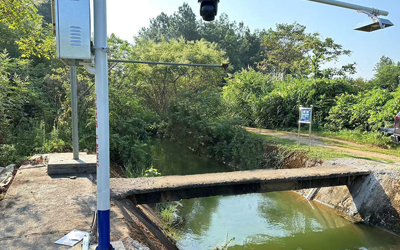
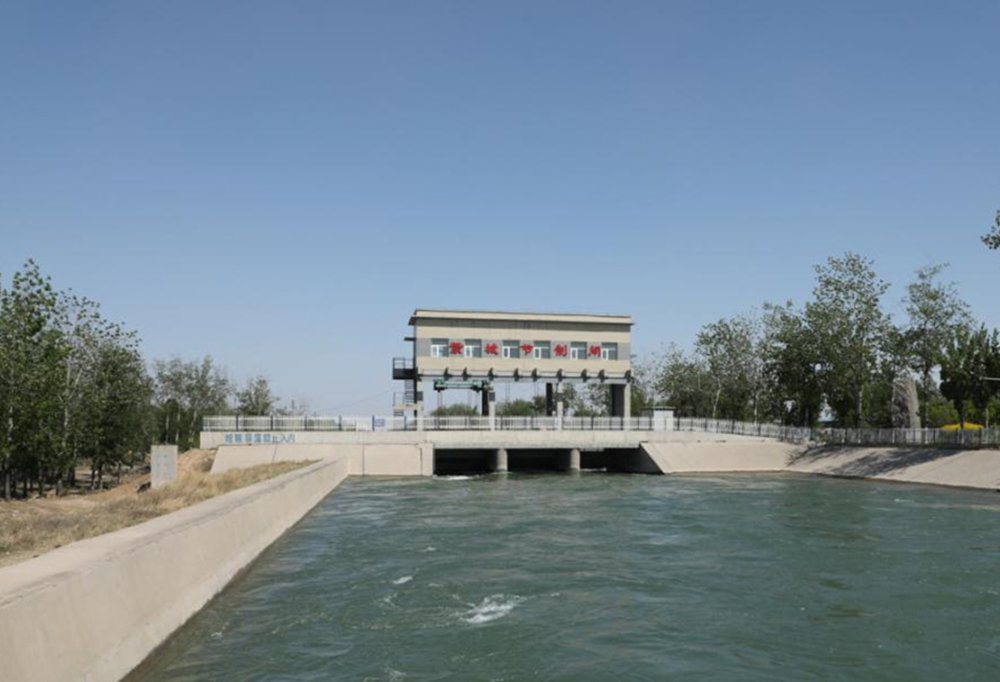
Safe flood prevention for reservoirs has always been a difficult and key point in China's flood control and flood fighting work, and the safe flood prevention of small and medium-sized reservoirs has become a weak link in the country's current flood control work. Most reservoirs lack necessary facilities such as safety monitoring, have backward inspection methods, and face great hidden dangers. Once local rainstorm floods occur, they are very likely to trigger dam breach incidents. In mild cases, property losses will be caused; in severe cases, major casualties or devastating disasters will occur.
However, after years of operation and use, the engineering facilities of reservoirs are generally aging and damaged, which seriously affects the safe operation of reservoirs and the exertion of economic benefits, and threatens the lives and property safety of the people downstream of the reservoirs. The CPC Central Committee and the State Council attach great importance to reservoir safety work, and require that during the "14th Five-Year Plan" period, reservoir safety appraisals should be carried out on schedule every year, new dangerous reservoirs should be reinforced in a timely manner to eliminate risks, and a long-term mechanism for reservoir operation and management should be improved. By the end of 2025, the reinforcement of existing dangerous reservoirs to eliminate risks and the reinforcement of new dangerous reservoirs identified after annual safety appraisals should be completed to ensure the safe operation of reservoirs, improve rainfall, hydrological and video monitoring as well as dam safety monitoring, and improve the long-term mechanism for reservoir safety operation, maintenance and management.
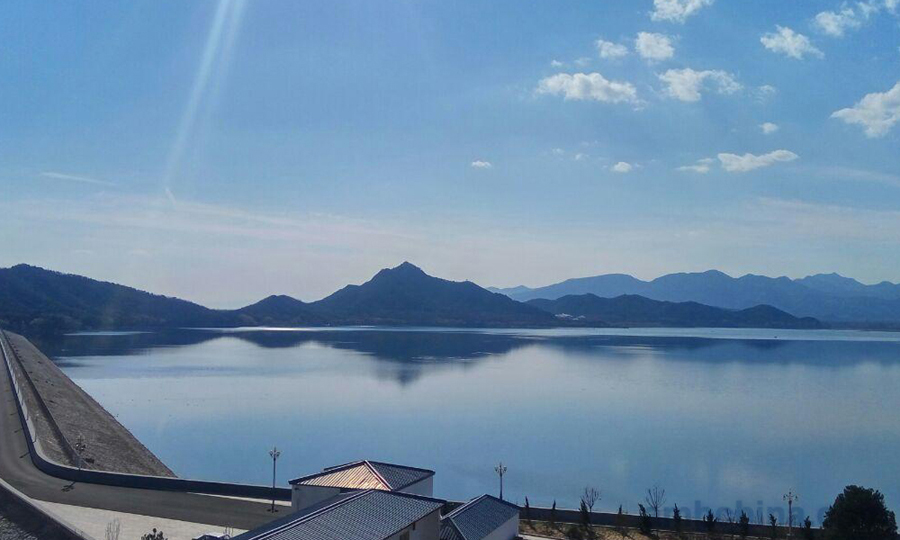
The rainfall, hydrological and safety monitoring system for small reservoirs is based on an open network architecture, which is divided into four layers as a whole: the front-end equipment layer, the network transmission layer, the system application layer, and the terminal strategy layer in sequence.
By using technologies such as the Internet of Things (IoT) and intelligent technology, it conducts real-time online management of the reservoir's rainfall and hydrological information. Video monitoring equipment is used to upload images from monitoring stations, and GNSS monitoring is applied for dam safety monitoring. Managers can view the relevant conditions of the reservoir through a large screen.
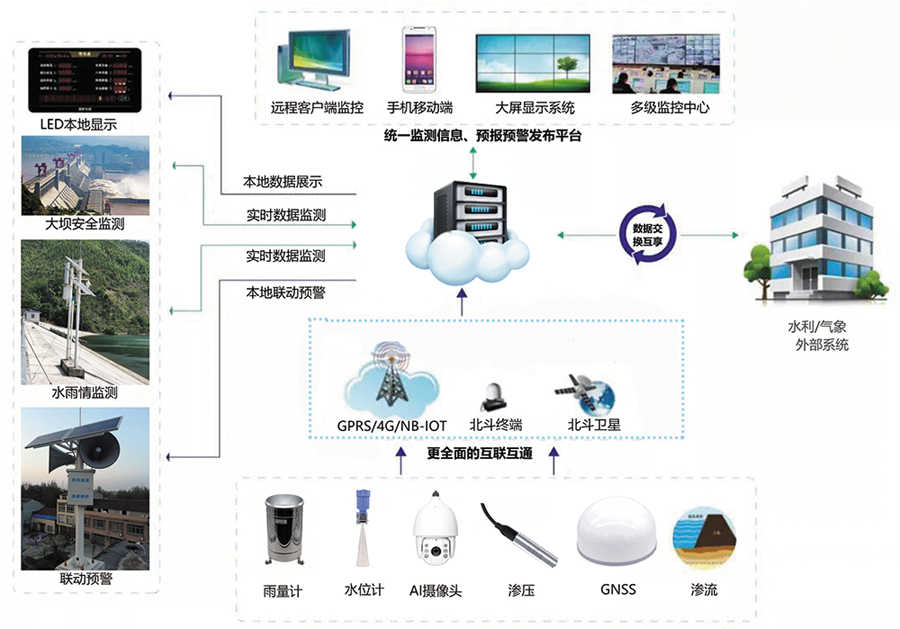
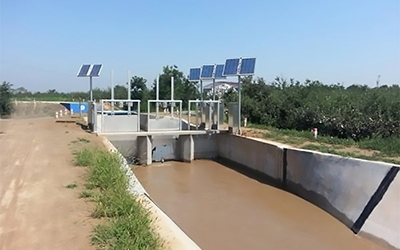
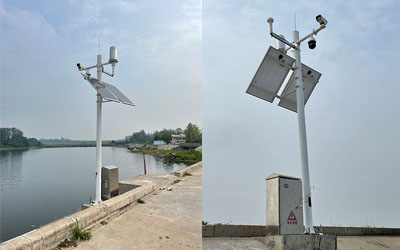
As the core front-end carrier of the rainfall, hydrological and safety monitoring system for small reservoirs, it conducts remote data collection of hydrological data such as reservoir water level monitoring, water flow monitoring, water velocity monitoring, water quality monitoring, rainfall monitoring, environmental videos, and reservoir water quality through data communication and collection equipment, and reports real-time data to the management platform.
Composed of a dedicated RTU (Remote Terminal Unit) and the public telecommunications network, its main function is to read and process data from various sensors in real time, and send the data to the system platform via 4G/5G, NB-IoT, or Beidou satellites.
The cloud-based integrated data processing platform realizes continuous real-time monitoring of monitoring points by collecting hydrological conditions, conducting data communication, processing and analyzing data, storing and forwarding data, etc. At the same time, through the system monitoring and management platform software and data models, it realizes comprehensive analysis and evaluation as well as operational applications, making it easy for administrators to grasp the load-bearing status of the reservoir in a timely manner.
Through the data analysis and transmission of the above three layers, the strategy layer can log in to the monitoring platform in real time to view information such as water level, rainfall, video monitoring, water quality, data, displacement monitoring, statistics and analysis.
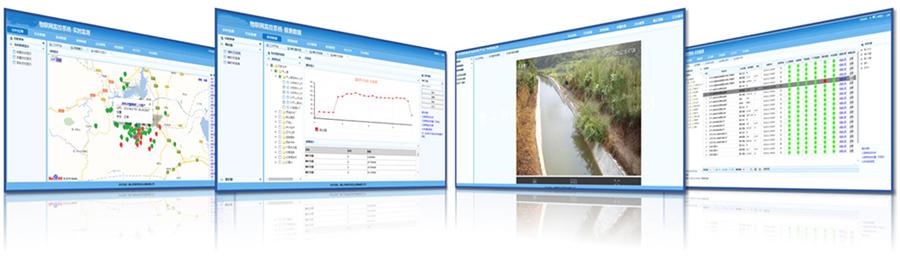
Real-Time Monitoring of Rainfall and Hydrological Conditions: It displays the latest water level, current rainfall, cumulative rainfall, on-site videos, and other data of each reservoir monitoring point in real time, and presents dynamic curves of water level and rainfall in real time.
Remote Video Monitoring: It supports real-time video monitoring and recording through multiple channels, and can update monitoring data and on-site video photos at regular intervals.

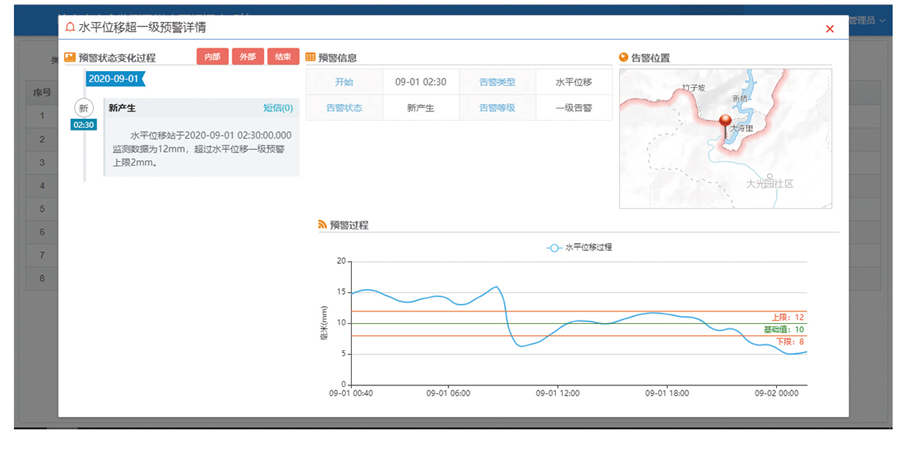
By combining AI big data with system data for analysis, when the reservoir water level is abnormal, the system will trigger alerts through methods such as popping up a prompt box, emitting an alarm sound, and sending alarm text messages to administrators.
By sorting out and analyzing the basic data in the system, it directly generates various types of correlation analysis charts.
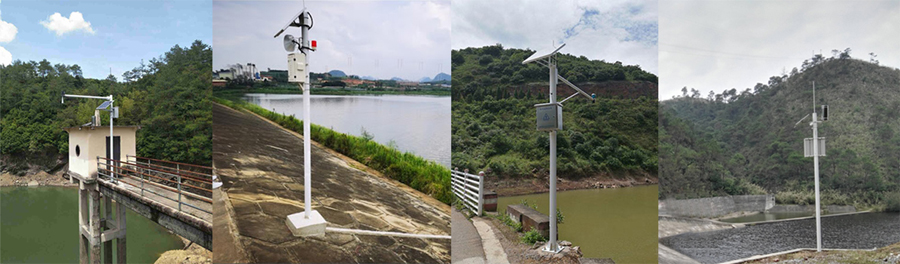
Integrated pole design enables quick debugging and deployment of front-end stations.
Multiple terminals are used for various types of monitoring, featuring high measurement accuracy and strong anti-interference capability.
Wireless transmission is adopted to break through geographical limitations, with high adaptability.
Based on independently developed wireless RTU products, remote debugging and maintenance of equipment can be realized.
The system platform based on B/S architecture allows quick and convenient access to the system.
The exclusive client enables users to check the current equipment status anytime and anywhere.
Multiple measures such as lightning protection, rain protection, moisture protection, and input signal isolation are adopted to ensure equipment safety, stable and reliable performance.
High compatibility, supporting various types of measuring instruments or sensors for water level, rainfall, displacement, etc.
Ultra-low power consumption: core equipment adopts 2G/3G/4G low-power measurement and control terminals, with an average working current of only 10mA, which greatly reduces the cost of solar-powered equipment and construction difficulty.
The solution for the rainfall, hydrological and safety monitoring system of small reservoirs can effectively conduct all-weather real-time monitoring of small reservoirs. It enables real-time grasp of reservoir water level, rainfall conditions, video monitoring, water quality, data, and displacement monitoring. In case of early warning of dangerous situations, response measures can be taken immediately. At the same time, it can use reservoir big data and meteorological data to predict reservoir water levels during the flood season and make relevant arrangements in advance. This is of great significance for the orderly progress of local reservoir water level monitoring, flood control and disaster reduction work.