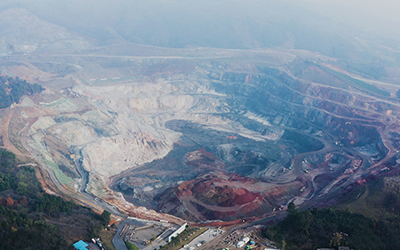
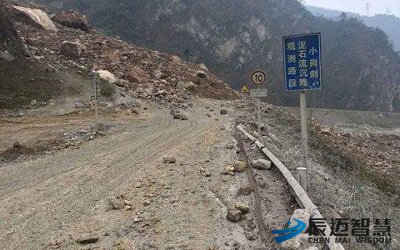
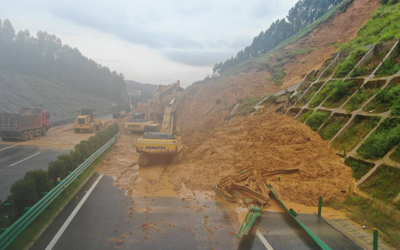
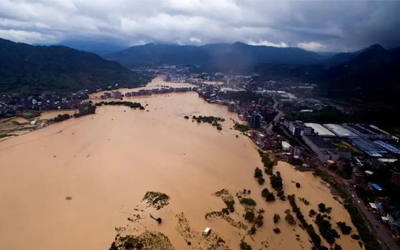
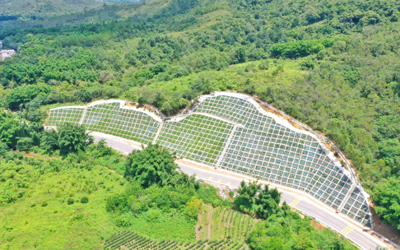
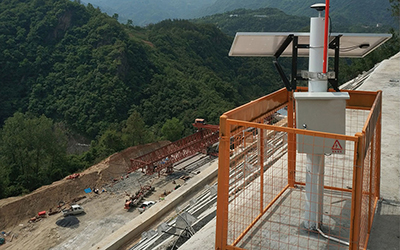
China has a vast territory and complex terrain. It is a country frequently affected by geological disasters such as collapses, landslides, and mudslides, with extremely serious disaster losses—especially in the central and western regions.
The natural environment of landslide hidden danger points is complex, making manual observation complicated, time-consuming, and labor-intensive. Once an abnormal state occurs at a hidden danger point, it must be detected and handled in a timely manner; otherwise, it may lead to serious consequences. If a landslide occurs, it poses a huge threat to the lives and property safety of the people living at the foot of the slope.
The landslide monitoring, safety online monitoring and early warning system is an important guarantee for maintaining the normal production order of the people living around the landslide hidden danger points.

The landslide early warning and monitoring system is a technical system used to monitor and issue early warnings for landslide disasters. By integrating multiple sensors, data acquisition devices, data transmission networks, and a data analysis and early warning platform, the system realizes real-time monitoring of landslide risks, data analysis, and release of early warnings.
The landslide early warning and monitoring system uses various types of sensors to conduct all-round monitoring of mountain bodies. These sensors include displacement sensors for measuring surface displacement, liquid level sensors for monitoring groundwater levels, and rain gauges for recording rainfall. By real-time sensing of key parameters such as mountain displacement, inclination, groundwater changes, and rainfall, the system can obtain precursor information of landslides.
The monitored data is transmitted to the data processing center in real time through the data transmission network. This process relies on advanced communication technologies such as 4G/5G, LoRa, and Beidou satellite communication to ensure accurate and fast data transmission.
At the data processing center, the system conducts in-depth analysis and processing of the received data to identify potential landslide risks. Once the data analysis results indicate a landslide risk, the early warning system will immediately activate the early warning process. Early warning information can be released to relevant departments and the public through multiple channels, such as text messages, phone calls, broadcasts, and online platforms.
Meanwhile, the system can also formulate targeted emergency response measures based on risk levels and regional characteristics to minimize losses caused by landslides.
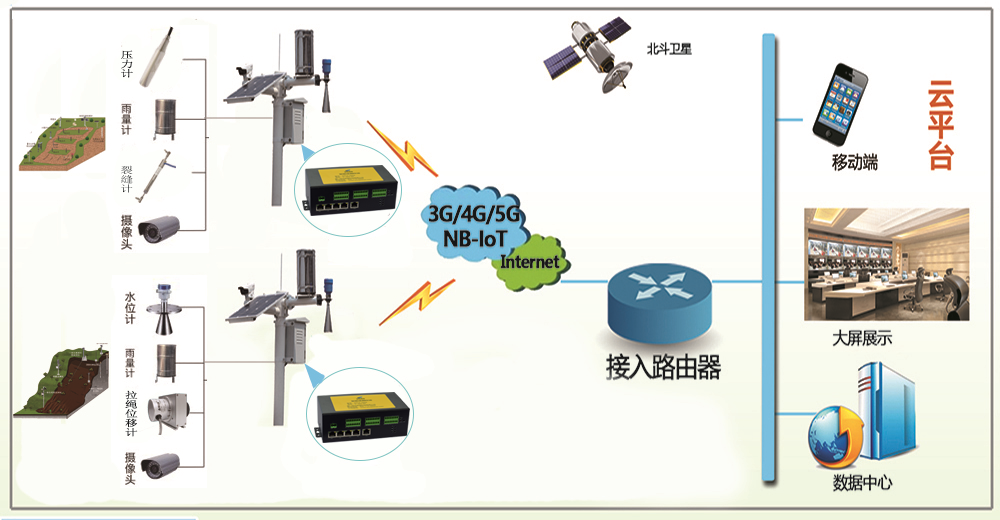 In addition, the landslide early warning and monitoring system is also equipped with remote monitoring and visual display functions. Through remote monitoring devices, users can check the real-time monitoring status of mountain bodies and understand the dynamic changes of landslide risks. The visual display function, on the other hand, can convert complex monitoring data into intuitive forms such as charts and images, facilitating user understanding and decision-making.
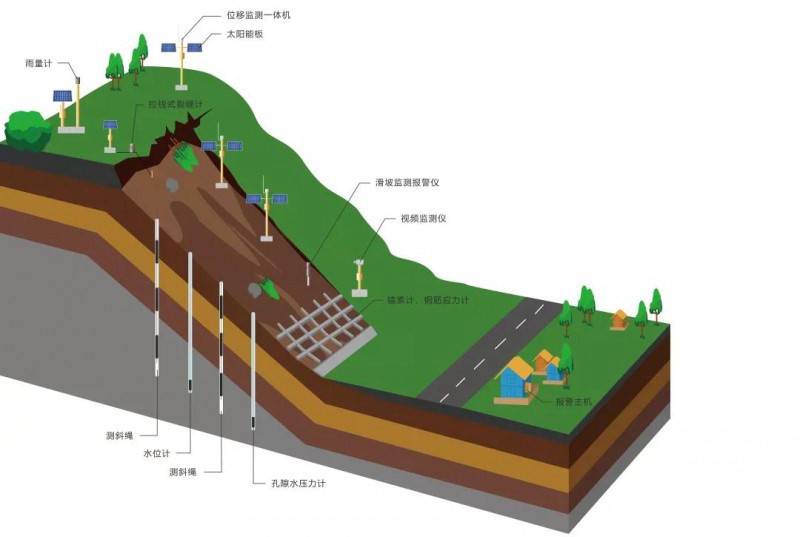
The early warning system for pre-landslide scenarios is an integrated system based on technologies such as the Internet of Things (IoT), big data, and artificial intelligence (AI). Its main functions can be briefly summarized as follows:
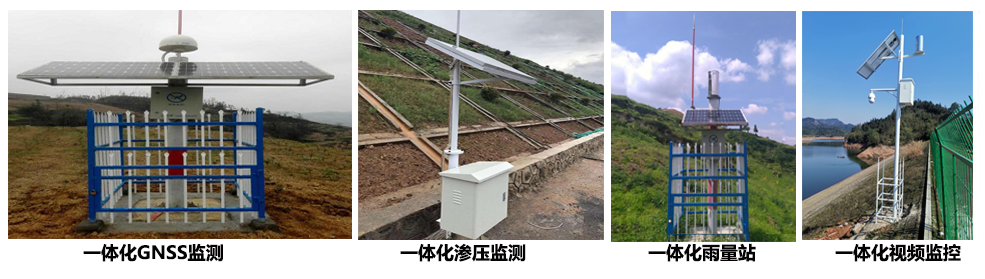
Real-Time Data Monitoring: The early warning system deploys various sensors in landslide-prone areas—such as soil moisture content sensors, soil pressure sensors, surface displacement sensors, and acceleration sensors—to monitor and collect various types of mountain-related data in real time.
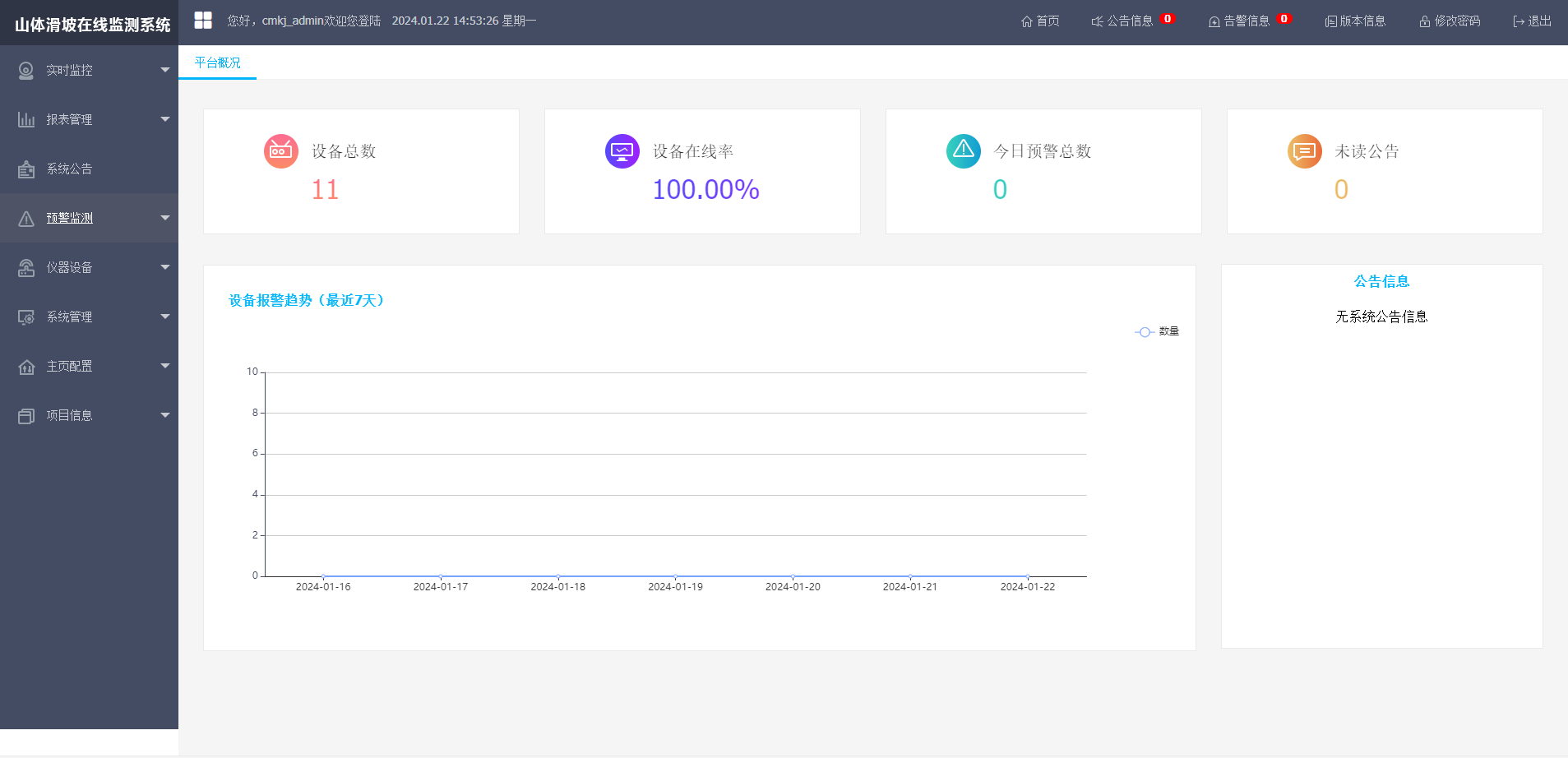
The early warning system processes and analyzes the collected real-time data. By comparing the changes between historical data and current data, it identifies potential landslide risks.
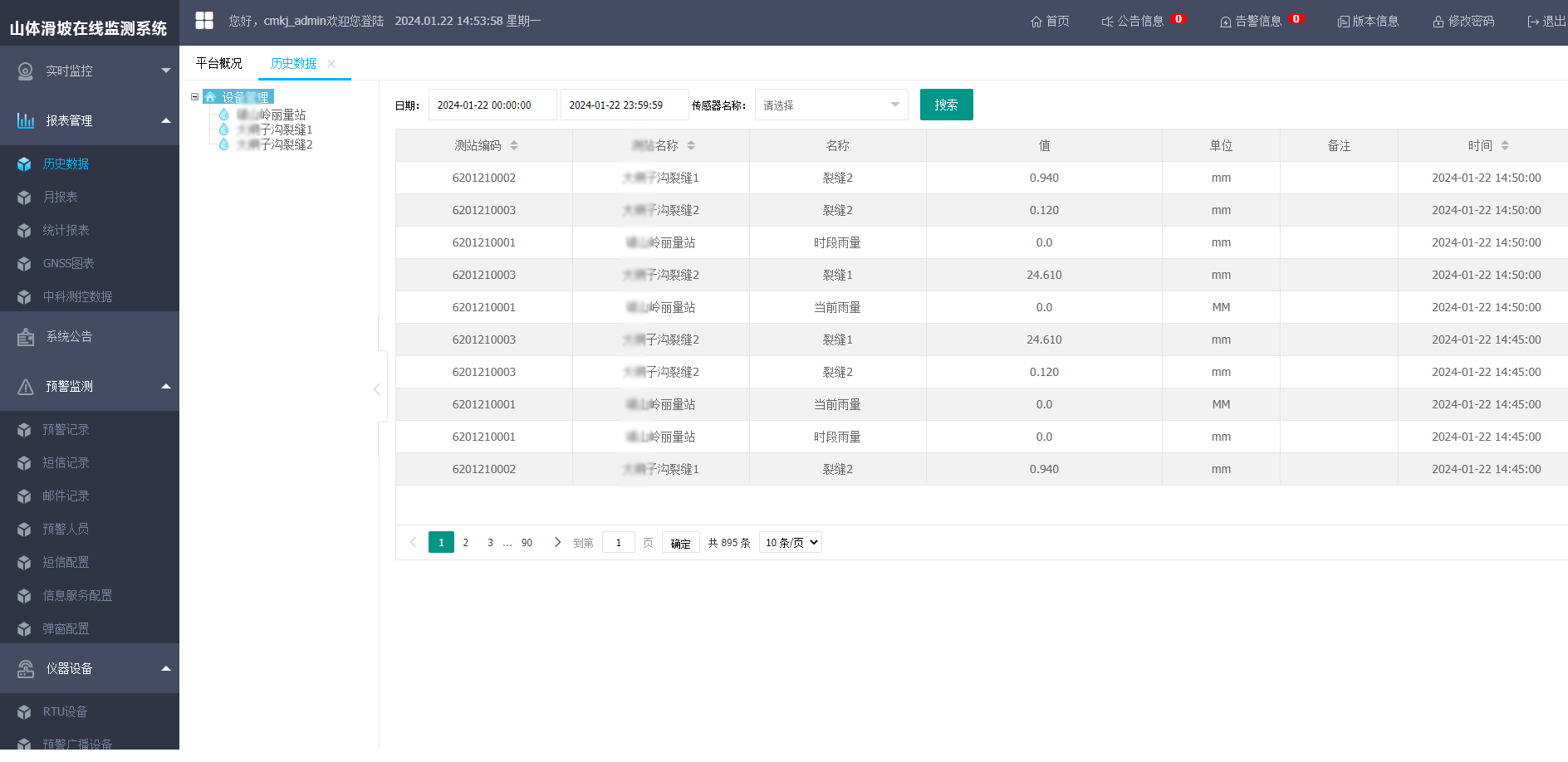
Based on machine learning and artificial intelligence technologies, the early warning system establishes a landslide prediction model. By analyzing historical data and real-time monitoring data, it predicts and judges potential landslides that may occur.
Once a landslide risk is predicted, the early warning system will immediately activate the early warning procedure. It notifies relevant departments and the public through multiple communication channels such as phone calls, text messages, and broadcasts to gain valuable emergency response time.
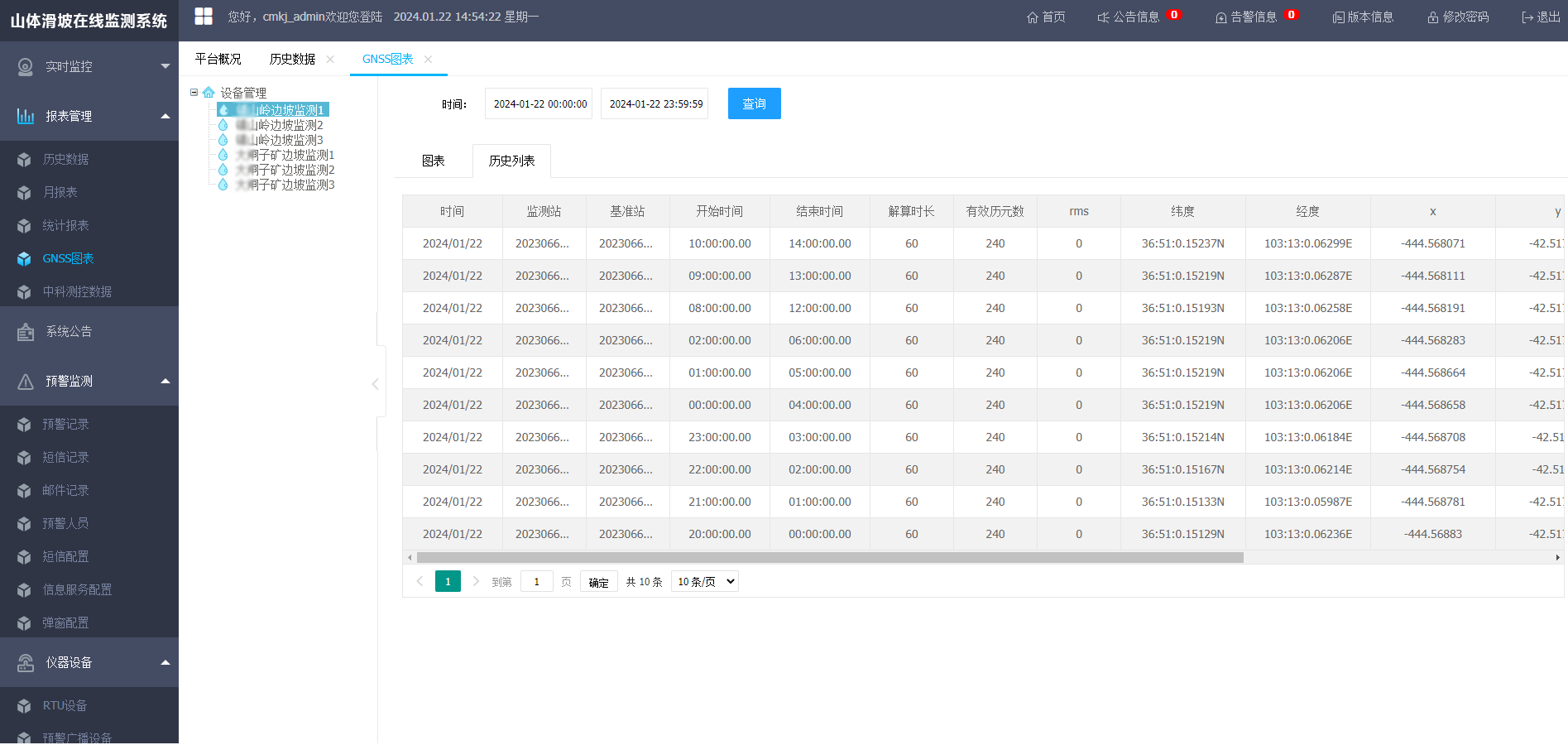
The early warning system also refers to historical disaster data to predict potential landslides. This helps relevant departments better understand the patterns and characteristics of landslides and formulate more scientific and effective rescue plans.
In general, the landslide early warning and monitoring system is a comprehensive technical system that integrates monitoring, analysis, early warning, and emergency response. By real-time monitoring the precursor information of landslides, it provides early warnings for potential landslide risks and offers strong technical support for disaster prevention and mitigation work. With the continuous development of science and technology, the system will continuously improve in terms of accuracy, timeliness, and intelligence level, and play a more important role in safeguarding people's lives and property safety.