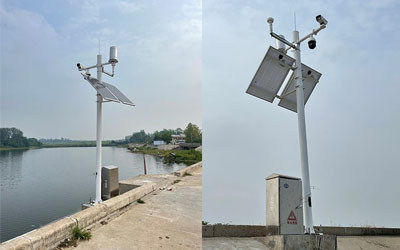
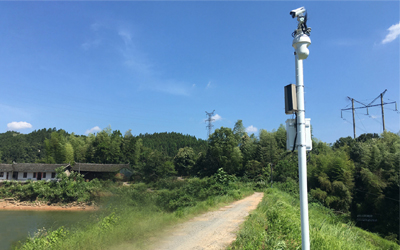
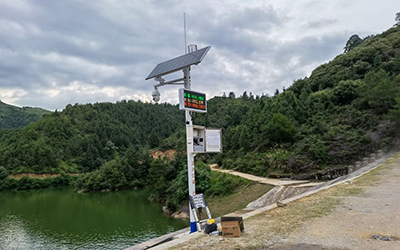
Reservoir and river channel video monitoring system
China boasts a vast territory with a wide latitudinal span and significant variations in distance from the sea. Coupled with its terrain sloping from west to east, these factors have shaped China’s distinct climatic features: complex and diverse climates, prominent monsoon climates, and strong continental characteristics.
Such climatic traits exert a profound impact on China’s national conditions. The complex and diverse climate allows most crops, plants, and animals worldwide to find suitable habitats in China, endowing the country with abundant agricultural, floral, and faunal resources. For instance, corn, originally native to Mexico, has been widely cultivated across China after introduction and has become one of the country’s major food crops.
However, this climatic environment also renders China prone to frequent hazardous weather events, which often adversely affect production, construction, and people’s livelihoods. Key hazardous weather phenomena with significant impacts include droughts, floods, cold waves, and typhoons.
China features complex terrain with numerous mountainous areas. Each flood season, losses caused by flash floods, mudslides, and landslides triggered by rainfall account for approximately half of the total losses incurred by natural disasters. Flash flood disasters are characterized by distinct traits: sudden occurrence, high susceptibility, frequent outbreaks, severe destructiveness, and difficulty in prevention and control. Once they strike, they can cause devastating damage to local regions. Establishing an automatic rainfall monitoring system is a key initiative by the Chinese government to combat such natural disasters. This system ensures that disaster relief efforts are conducted promptly and in an orderly manner under the guidance of relevant competent authorities, minimizing casualties and property losses among the people, as well as reducing the socio-economic impact of such natural disasters.
Ensuring safe passage through the flood season is a priority and major challenge in China’s natural disaster prevention and control. Currently, relevant administrative departments in various regions across the country generally face the following difficulties in flood season safety management:
① The flood season management sites are scattered, remote, and inconvenient in transportation;
② High potential safety hazards, which are prone to sudden occurrence during the rainy and flood seasons;
③ Insufficient management personnel, leading to difficulties in attending to multiple tasks simultaneously during the flood season;
④ Lack of power supply at the flood season management sites.
To address the aforementioned management challenges, installing an automatic rainfall and meteorological monitoring system for real-time rainfall monitoring is an essential means to grasp the status of flood season management areas, issue early warnings for safety incidents, and support flood control and disaster relief efforts.
This system is suitable for hydrological departments to conduct real-time monitoring of hydrological parameters such as rivers, lakes, reservoirs, canals, and groundwater. Monitoring parameters include: air temperature, humidity, wind speed, wind direction, rainfall, and water level.
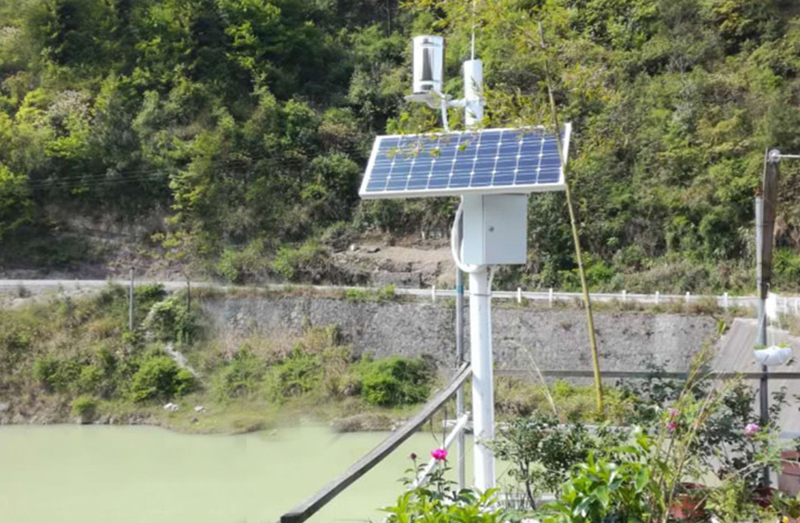
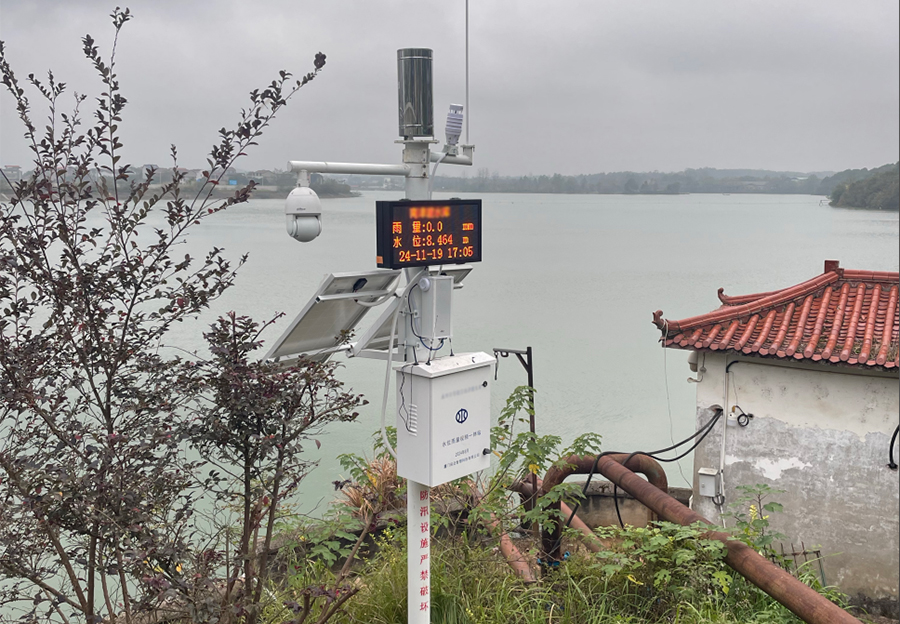
The automatic rainfall and meteorological monitoring system consists of the following components: data acquisition system, solar power supply system, all-weather protective cabinet, meteorological observation bracket, video surveillance system, and central control system (including servers and management platform).
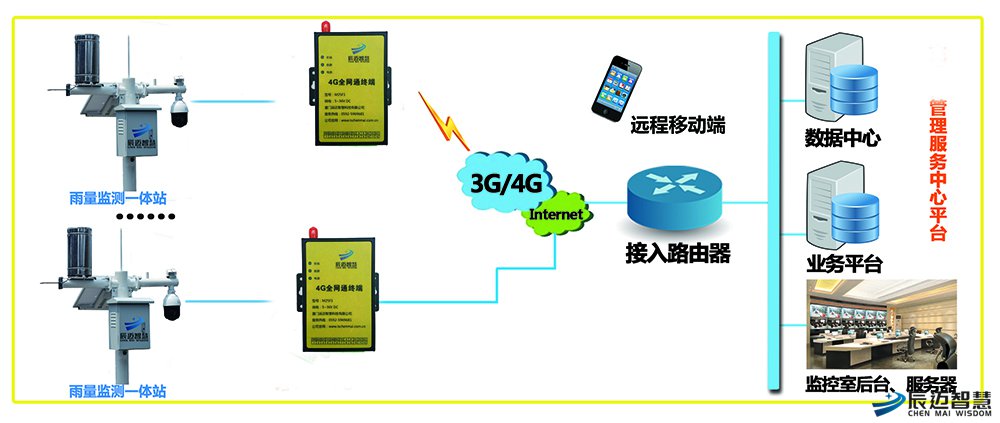
The automatic rainfall and meteorological station is a dedicated outdoor control unit designed specifically for rainfall monitoring.
This device can collect data from the following channels: 1-channel rainfall (including total rainfall, instantaneous rainfall, daily rainfall, current rainfall, and 10-minute rainfall), 1-channel wind speed, 1-channel wind direction, 1-channel temperature and humidity (via a Stevenson screen), and 1-channel liquid level (for monitoring reservoir water level). It is powered by a solar energy system with a built-in wide-temperature colloidal maintenance-free battery, making it ideal for scenarios without mains power supply such as reservoir early warning and flash flood monitoring.
The device can directly upload data to our environmental monitoring cloud platform via 2G/3G/4G communication. Customers can access real-time data, manage devices, and view historical records anytime and anywhere through a web browser or mobile APP.
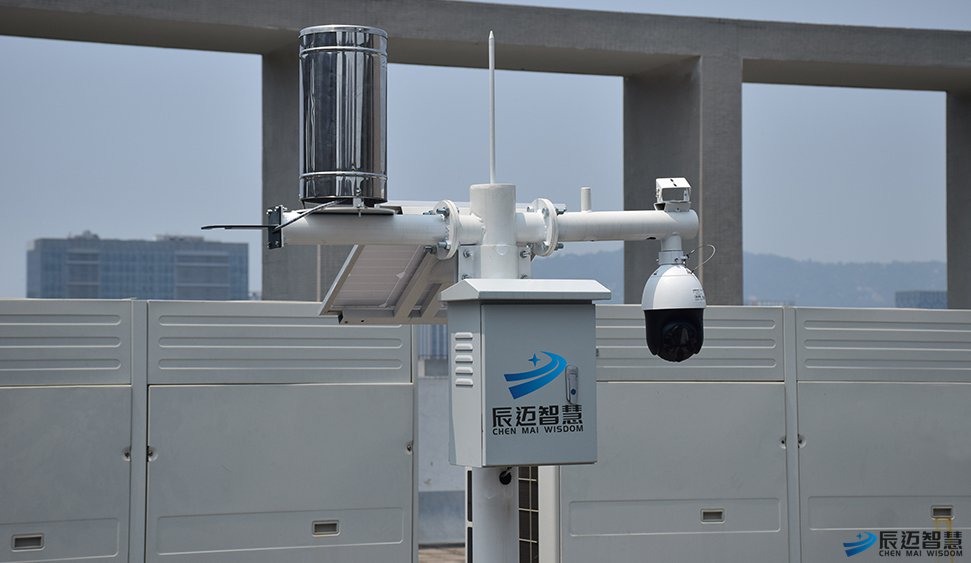
◆ No software installation required. Equipped with a modern monitoring platform, it receives transmitted rainfall data when it rains and enters sleep mode during dry periods—simple and practical.◆ In addition to sending rainfall data at the start and end of rainfall, the device automatically reports data at user-configurable intervals throughout a single rainfall event.◆ Automatic rainfall data statistics: It calculates cumulative rainfall every N minutes (N = user-defined interval), resets the counter after each interval, and automatically accumulates data including event rainfall, daily rainfall, weekly rainfall, monthly rainfall, and annual rainfall. Multiple sets of data can be directly copied to Excel spreadsheets.◆ Data transmission redundancy: If data upload fails, the device automatically caches data locally. Once the network is restored, all cached data will be sent to the designated email address in one batch.◆ SMS configuration function: Users can log in to the IoT platform (web version) and send parameter configuration SMS to the device, enabling remote control of the rainfall monitoring station for easy operation.◆ Multi-site support: The platform supports multiple monitoring stations, effectively meeting users' needs for multi-location forecasting, monitoring, and statistical analysis.◆ Compact design: Equipped with a 2.3m stainless steel bracket, solar panel, and ABS rain gauge—easy to carry, transport, and install.◆ High-performance rainfall sensor: Features excellent linearity, high measurement accuracy, long transmission distance, and strong anti-interference capability.◆ Built-in filter circuit: Effectively filters out interference signals.◆ Durable sensor housing: Made of ABS material, it offers strong environmental resistance, low susceptibility to acid and alkali corrosion, no rusting, excellent appearance finish, and minimal error caused by stagnant water.◆ Precision-engineered tipping bucket mechanism: The sensor's tipping bucket support system is meticulously manufactured with low friction torque, ensuring sensitive flipping, stable performance, and reliable operation.◆ Level adjustment bubble: A built-in spirit level in the sensor base assists in adjusting the device to optimal horizontality via adjustable feet.
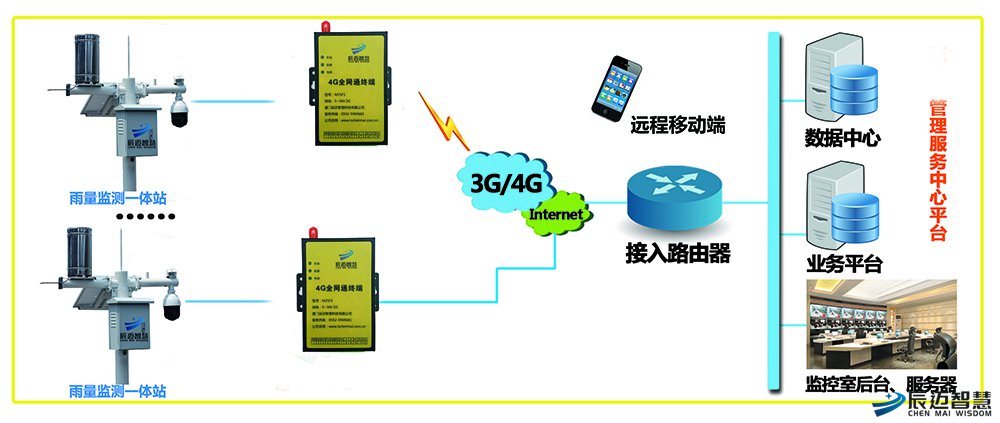
The system is widely used for groundwater level monitoring, groundwater temperature monitoring, river water level monitoring, reservoir water level and temperature monitoring, and pool water level monitoring.
In mountainous areas, manual inspection of hydrological and meteorological conditions (including rainfall and water levels) of tributaries and upstream reservoirs often requires long-distance travel, with no guarantee of data timeliness or accuracy. After the installation of this system, it significantly reduces labor and financial costs. Moreover, the system outperforms manual observation in data timeliness, greatly improving power generation efficiency, cutting costs, and creating greater economic value.