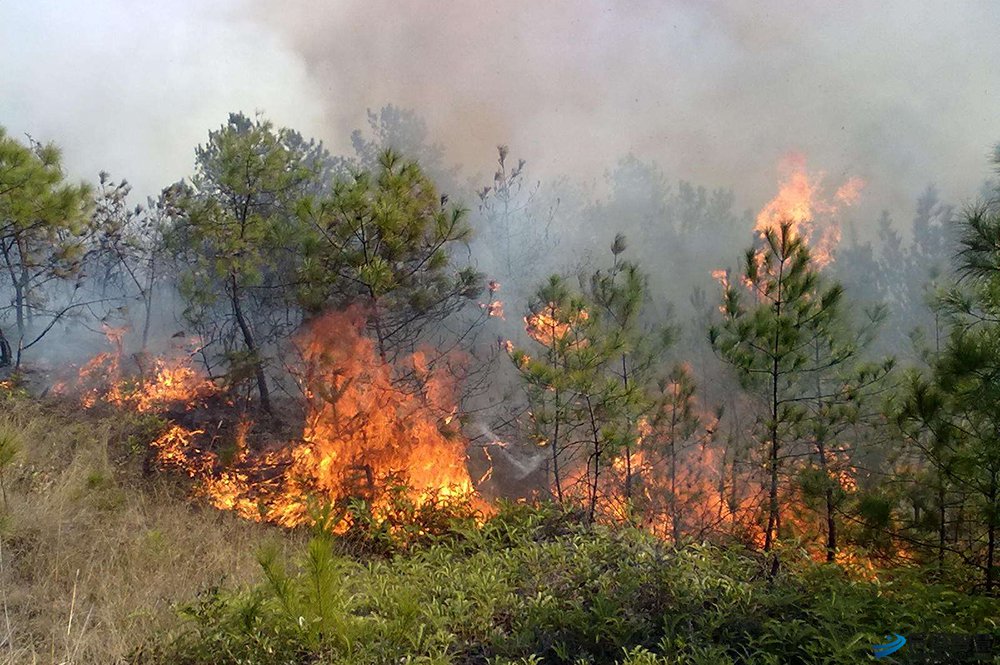
Forest fire is the most dangerous enemy of forests and the most terrifying disaster in forestry, as it brings the most harmful and devastating consequences to forests. However, with global warming, forest fires have become one of the major worldwide forestry disasters. They occur from time to time every year, causing significant losses of forestry resources and global environmental pollution.
Forests are generally located in remote areas, with high mountains, long roads, vast areas and dense vegetation. During daily inspection and maintenance, even if inspections are conducted once a week, it still consumes a large amount of human and material resources. In the process of manual inspections, there may also be problems such as delays and slack work. Therefore, it has become increasingly necessary to adopt high-tech means to realize inspection and supervision, and eliminate hidden dangers in their early stages.
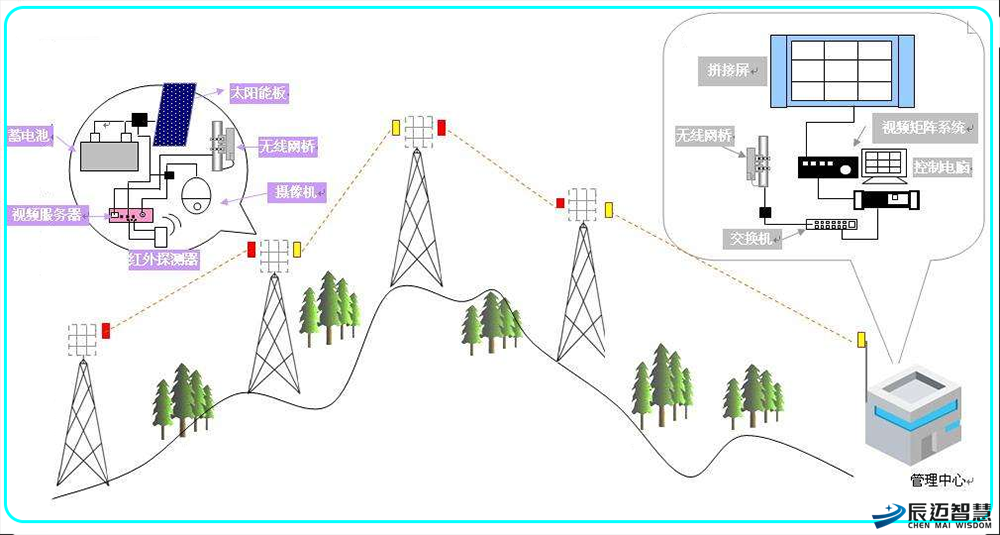
The wireless monitoring system for forest fire prevention mainly includes: front-end video collection, wireless transmission section, monitoring center display and storage, solar power supply system, iron tower, lightning protection system, fire prevention software and positioning. The wireless transmission section is composed of a wireless network, a high-gain antenna, a lightning arrester and a waterproof system.
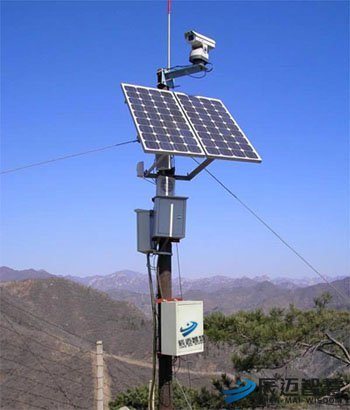
1.Wireless Transmission FunctionThe wireless network (for short-distance and long-distance transmission) is safe and stable, and it is a crucial link throughout the entire system. All signal transmission is completed via 4G/5G networks, and the algorithms used in signal transmission are the key to the linkage response speed of the entire system.
2.Solar Power Supply, Lightning Protection, and Iron Tower Functions
The power supply ensures the system operates with uninterrupted power supply 24 hours a day in all-weather environments.
The lightning protection system can effectively protect the safe operation of electronic equipment and greatly reduce the probability of lightning strikes.
The iron tower provides a wide capture angle and field of view for the camera, and offers unobstructed line-of-sight transmission conditions for the wireless transmission part.
3.Forest Fire Monitoring
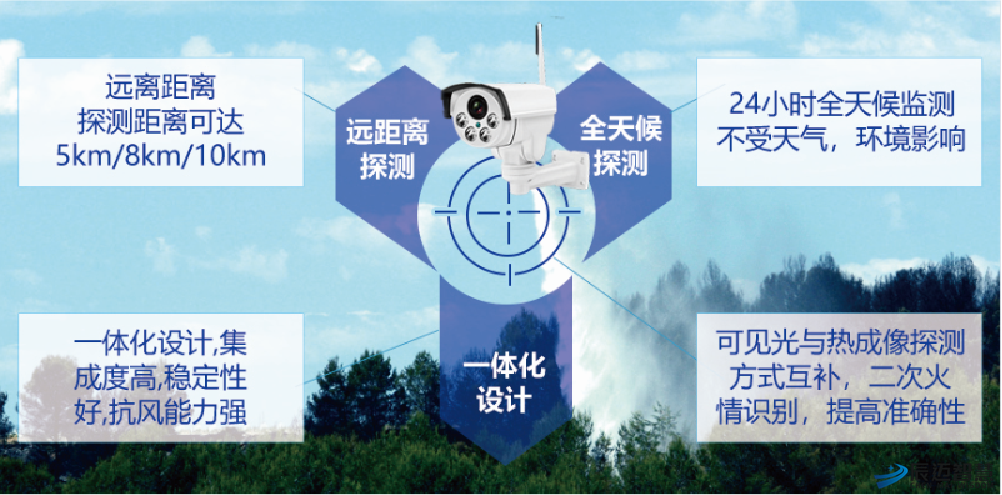
When the monitoring camera captures a forest fire or smoke, the system automatically issues a warning to the on-duty personnel at the command center. The on-duty personnel then confirm the fire situation and the fire point location, and send out alarm information through the SMS platform.
Information such as the camera's azimuth and pitch angle is transmitted back via the front-end digital pan-tilt. The geographic information system automatically calculates the longitude and latitude of the fire point and locates it on the electronic map.
Monitoring image display: It can display real-time images from front-end monitoring points in a multi-screen format, with flexible control and switching capabilities.
Flexible operation and control: Using the monitoring and management software, operators can flexibly control the pan-tilt rotation, camera zoom, etc. They can also control the front-end monitoring equipment through multiple modes such as pan-tilt presets and polling.
Image storage and playback: Video images from all collection points can be recorded and stored in full, meeting the 24/7 storage requirement. Historical images can be queried and played back—by filtering conditions such as time, date, and the code of the front-end monitoring point, users can complete the query, retrieval, and playback of monitoring image data.
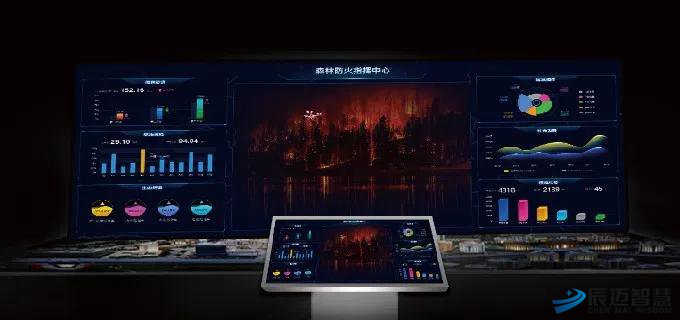
System security management includes two aspects. First is equipment security management: anti-theft cameras, infrared detectors and other devices are installed at front-end monitoring points, which have anti-theft alarm functions. When theft or damage occurs, an alarm can be sent to the command center. Second is security management in terms of system usage: it adopts methods such as personnel identity authentication, access control permission functions and audit functions to ensure the safe and reliable use of the system.
All major devices support remote network management and upgrade functions. The parameters and settings of major devices can be managed remotely through the network.
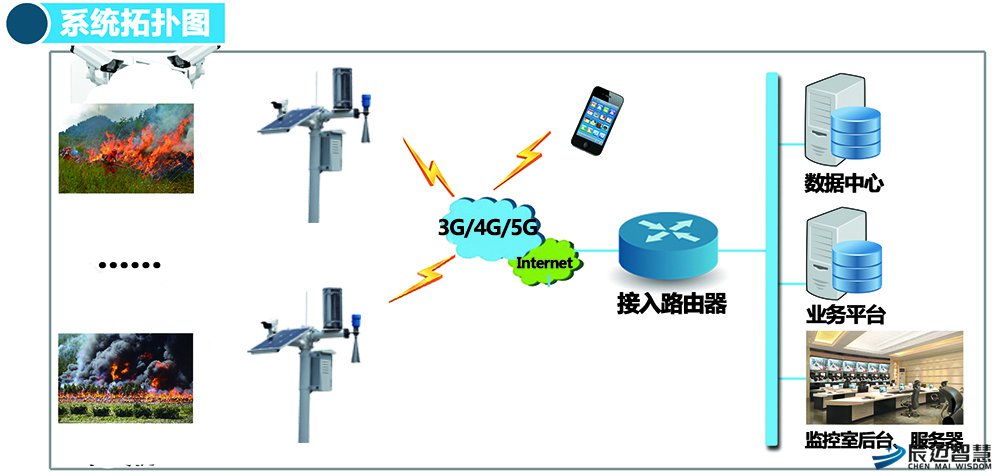
The forest area is monitored 24 hours a day without interruption through cameras and various sensors, and the monitoring data is transmitted to the management platform via 4G/5G data transmission terminals for analysis.
*Once a fire is confirmed, managers can be notified immediately.
*Quickly locate the fire area based on GIS map information.
*Deduce the possible spread range and spread speed of the fire according to environmental factors such as temperature, humidity, wind force and wind direction, providing strong scientific basis for rescue, decision-making and command.
*The system will automatically generate multiple rescue routes for the fire area based on the GIS map for rescuers' reference, so that they can reach the scene safely and quickly.
*Conduct smoldering fire inspection in the extinguished areas to eliminate potential hazards.
*After the fire rescue is completed, the system will evaluate the damage to personnel, property, forest vegetation and natural environment caused by the fire based on the fire area combined with the GIS map, and automatically generate a fire report.

The wireless monitoring system solution for forest fire prevention realizes the standardization, scientization and informatization of forest fire prevention work, and truly achieves early detection and early resolution of potential fire hazards. Digital forest monitoring has become a necessary means to detect and eliminate potential forest fire hazards at an early stage, which essentially improves the efficiency and quality of forest environmental protection work.