With the development of ecological environment monitoring networks and the promotion of grid-based water quality monitoring, automatic water environment monitoring stations need to be deployed more densely to meet the needs of big data applications such as pollution source tracing, water quality early warning, and river chief assessment.
Conventional automatic water quality monitoring stations occupy a large area and require high infrastructure investment, making it difficult for them to adapt to the application needs under the new situation of environmental monitoring. To address this, Xiamen Chenmai Smart Technology Co., Ltd. has developed a miniature automatic water quality monitoring system based on its years of experience in R&D and integration of online water quality monitoring instruments.
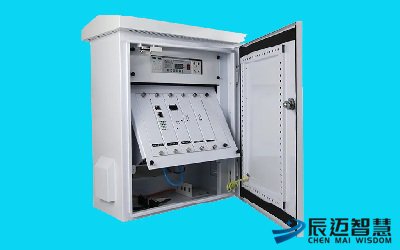
This system adopts pre-integrated outdoor monitoring, covers a small area, and integrates technologies such as comprehensive intelligent miniature monitoring sensors, automatic control, computer applications, and communication networks. It can fully adapt to management needs by using low-cost grid-based deployment and high-frequency monitoring methods, and is equipped with a strict data quality control system. It meets the big data monitoring needs of river basin water quality evaluation, pollution source tracing, water quality early warning, and river (lake) chief assessment.

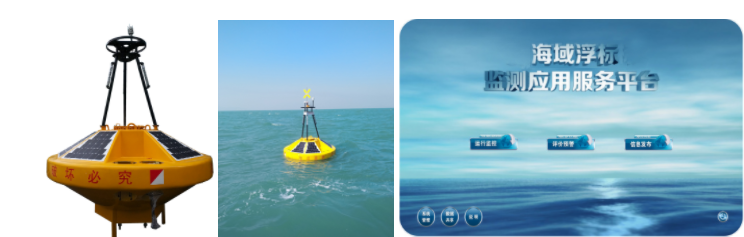
The Marine Buoy Online Monitoring System utilizes advanced IoT technology and wireless sensing technology to realize online monitoring of parameters such as water quality, ocean currents, waves, and meteorology, providing comprehensive data support for marine ecological research. The observation point takes the buoy body as the platform. In addition to the fixed-point deployment of instruments and equipment on the surface layer, some equipment can also move vertically through the automatic lifting system to realize the collection of layered data.
The buoy system is integrated with a solar power supply system and a wireless collection and transmission system. It can report data and information to the management center station via GPRS/Beidou satellite network. At the same time, it is equipped with a safety protection system, an operation monitoring and self-inspection system, which effectively ensures the stable operation of the observation point under long-term unattended conditions and provides basic data support for the governance, development, and protection research of the marine ecosystem.
The system consists of a monitoring center, a transmission unit, an intelligent station, a buoy station, etc., and has functions such as system operation status monitoring, video monitoring, water quality monitoring system, buoy status monitoring, remote control, and remote operation.
The Marine Buoy Online Monitoring System overcomes the shortcomings of conventional water quality analysis instruments. Using wireless data transmission equipment, it can provide accurate, fast monitoring and transmission data in a real-time, continuous, stable, and reliable manner. The monitoring factors cover the conventional main parameters of water quality monitoring, chlorophyll, turbidity, CDOM, COD, BOD, cyanobacteria, ammonia nitrogen, permanganate index, TOC, total phosphorus, total nitrogen, phosphate, nitrate nitrogen, nitrite nitrogen, silicate, heavy metals (Fe, Mn, Pb, Cd, Cr⁶⁺), split-type meteorological instruments, and integrated meteorological instruments. Customization can be made according to the characteristics of the actual target water area and the needs of the actual monitoring task.
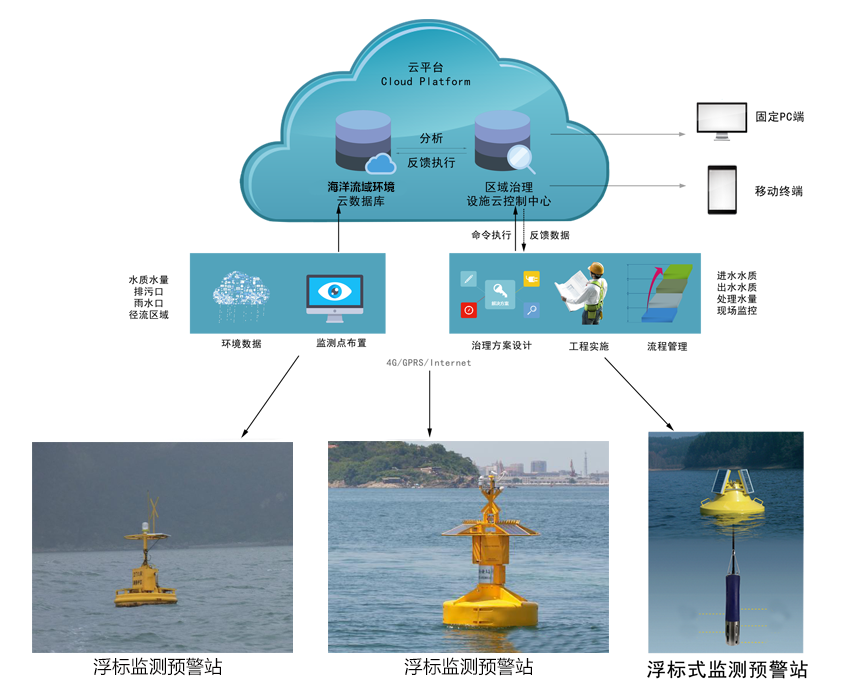
Intelligent identification-based water conservancy automatic monitoring (collection of water quality parameters, nutrient salt parameters, hydrological parameters, meteorological and other data), and water quality/pollution source monitoring terminals.
Mainly using 2G/3G/4G communication methods, with SMS backup as a supplement (Beidou satellite is customizable).
Composed of servers, public network dedicated lines (or mobile dedicated lines), and water quality and hydrology monitoring system software.
Wave sensors, water quality sensors, water level gauges, cameras or other instrument transmitters.
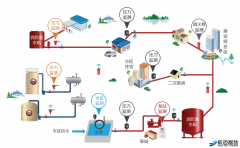
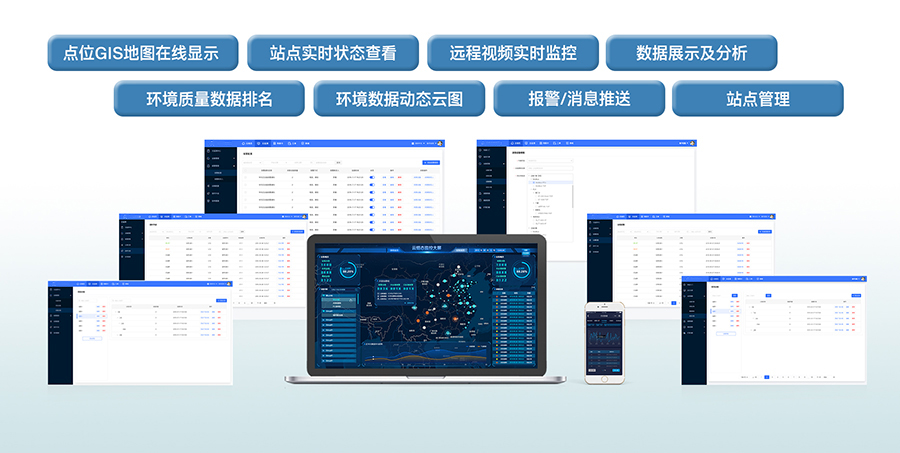
This system is suitable for real-time online monitoring of on-site data, including water level monitoring, water quality monitoring, pollution status monitoring, floating object monitoring, water shore garbage detection, AI image recognition for water level and flow velocity, as well as video images. By virtue of the Internet of Things (IoT) and AI cloud computing, it enables real-time remote transmission of on-site data via the network. It also features automatic functions to keep track of changes at any time and notify relevant departments for rectification. Additionally, it supports linked information output and can be connected to multi-functional early warning devices to achieve linkage.
█ Real-Time Data Monitoring: Through water quality and water level sensors connected to on-site installed wireless collection devices, various types of on-site water quality and water level data are collected in real time. The data is then immediately uploaded to the monitoring center via an intelligent gateway, ensuring data timeliness.
█ Remote Centralized Management: Based on the installation locations of wireless devices and sensors, the system can display devices in the entire system by region, enabling differentiated management of monitoring devices in different locations and scenarios. It also supports centralized monitoring of multiple regions simultaneously.
█ Raw Data Processing: The data uploaded to the server is preprocessed. Temporal data graphs or exported data reports can be generated on the platform, serving the purpose of analyzing the on-site marine ecology.
█ Data Breakpoint Resume Storage: In this solution, if the network connection to the upload server is interrupted, the intelligent gateway used can automatically store the data uploaded by the connected devices below. Once the transmission network is reconnected successfully, the cached data will be uploaded to the server immediately, preventing data loss due to network issues.
█ Intelligent SMS Alarm Function: When the monitored water quality concentration exceeds the limit concentration of other on-site locations, the system can trigger alarm reminders in multiple scenarios, including the platform end, the equipment site, and the user's mobile phone via SMS. This facilitates the customer's understanding of the on-site environment.
█ Active Fault Reminder: If any abnormality occurs in the on-site monitoring equipment, the equipment will proactively report the abnormal status. This helps customers detect problems in a timely manner and accurately identify the faulty equipment.
█ Remote Equipment Control: Customers can perform remote operations on on-site monitoring equipment from the monitoring center, such as remote startup and setting working hours. They can also query the current working status of the equipment.
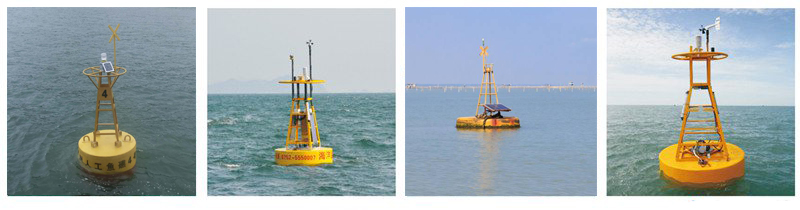
◆ Enables in-situ, real-time, and long-term online monitoring of marine elements◆ Capable of simultaneously monitoring multiple parameters including water quality, ocean currents, waves, and meteorology◆ The buoy body is made of high-strength elastic polyurea material, featuring excellent corrosion resistance◆ All external ports and test ports adhere to military specifications, with superior sealing performance and excellent field operability◆ The system has a long overall service life (up to 10-12 years) and can withstand typhoons of magnitude 15◆ Equipped with a comprehensive safety protection system to ensure the buoy's safety under long-term unattended working conditions◆ The system supports customization and can perform surface monitoring or multi-layer profile monitoring (requiring matching mooring chains or mobile profile monitoring systems)
The Marine Buoy Online Monitoring System is widely used in multiple aspects, including: hydrological monitoring at river estuaries; water quality monitoring in nature reserves, functional zones and industrial zones; temperature and water quality monitoring of coastal nuclear power plants; water quality and environmental monitoring in port and terminal areas; monitoring of marine sudden disasters (red tides, oil spill incidents); and monitoring for marine disaster prevention, mitigation and early warning.