With the continuous development of industry and the rapid growth of urban populations, the discharge volume of industrial wastewater and urban sewage has increased significantly. Currently, China has become one of the countries with large sewage discharge volume and fast growth rate in the world.
However, overall sewage treatment capacity remains relatively low. A considerable amount of untreated sewage is discharged directly or indirectly, and some major polluters even engage in illegal discharge or leaky discharge. This has severely polluted natural water bodies and the ecological environment, exerting an extremely negative impact on people’s quality of life and health.
To timely and accurately grasp the operational characteristics of urban water supply and drainage pipe networks, it is necessary to measure various basic operational parameters such as liquid level, flow velocity, and flow rate, obtain continuous data on these parameters, and understand their variation patterns. Through real-time analysis, statistical calculation, and model simulation of these basic data, comprehensive diagnosis and evaluation of the system’s current status can be conducted, laying a solid data foundation for the development of various research work.
The urban sewage pipe network flow online monitoring system can realize real-time monitoring of underground sewage flow in urban sewage pipe networks and use the monitoring data to support the management and maintenance of sewage pipe networks. It enables accurate mastery of internal pipe flow data, thereby optimizing water resource utilization, ensuring urban drainage safety, and improving the level of urban management.
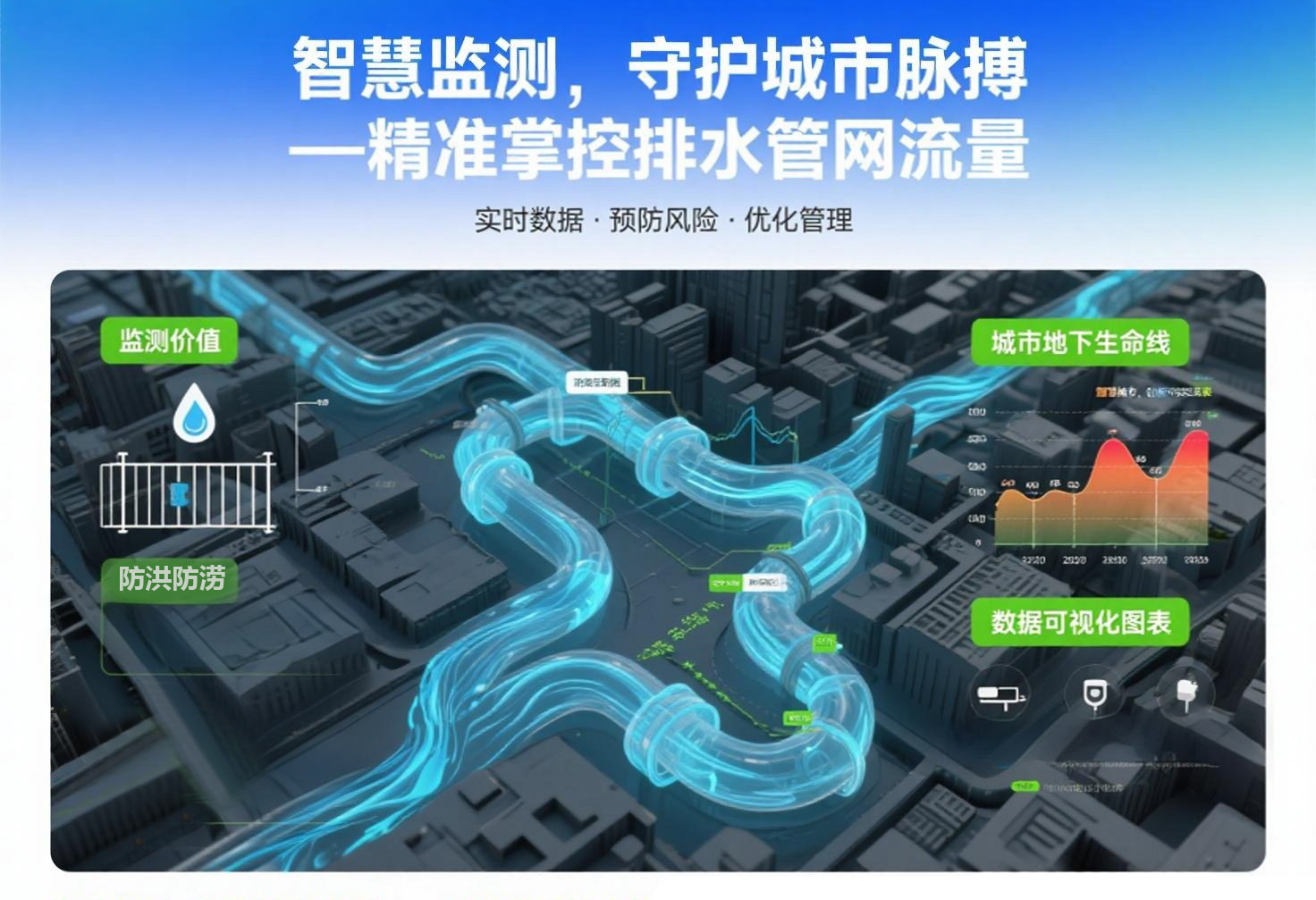
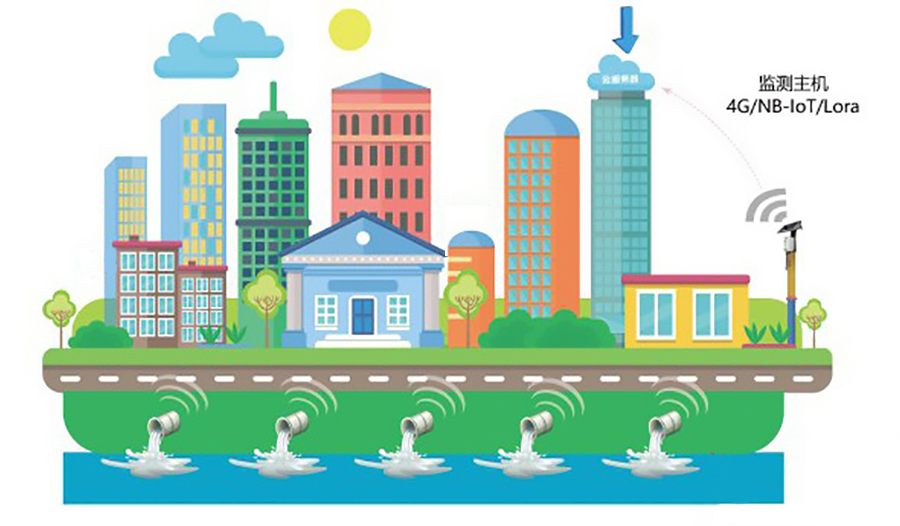
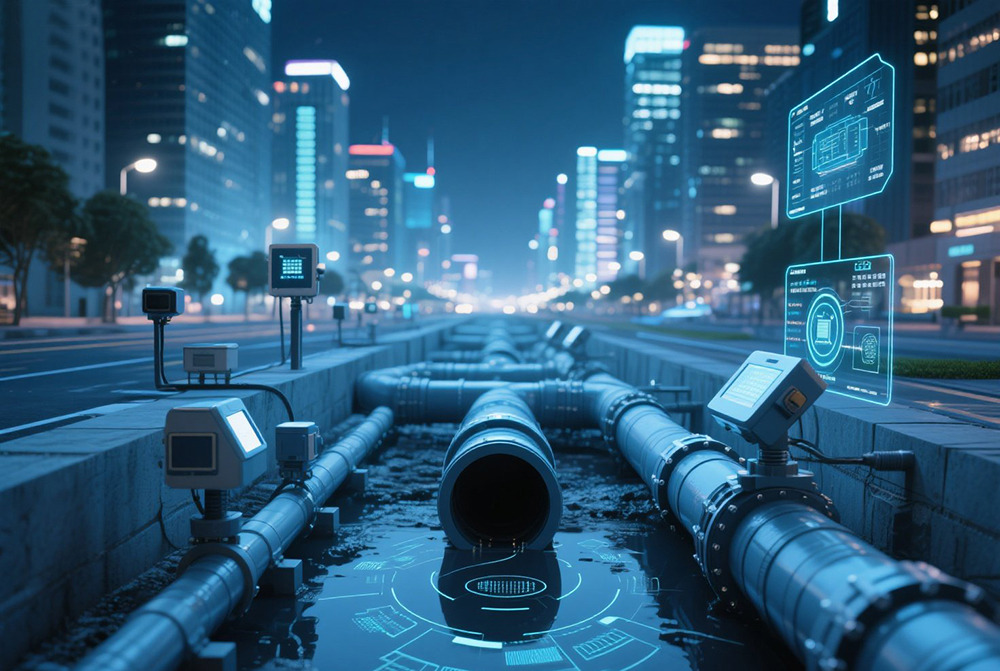
The overall architecture of the urban drainage pipe network flow monitoring system mainly consists of three layers: the Perception Layer, the Network Layer, and the Application Layer. Through the organic integration of hardware and software, this system has successfully built a comprehensive, powerful, and stable drainage pipe network flow monitoring system.
The Perception Layer is responsible for collecting various real-time data and information from the drainage pipe network, including but not limited to key parameters such as water level, flow rate, and water quality. The Network Layer ensures that these data are transmitted to the Application Layer efficiently and securely. Leveraging these data, the Application Layer utilizes advanced data analysis and processing technologies to provide urban managers with real-time monitoring information and early warning services, thereby effectively enhancing the intelligence and refinement level of urban drainage management.
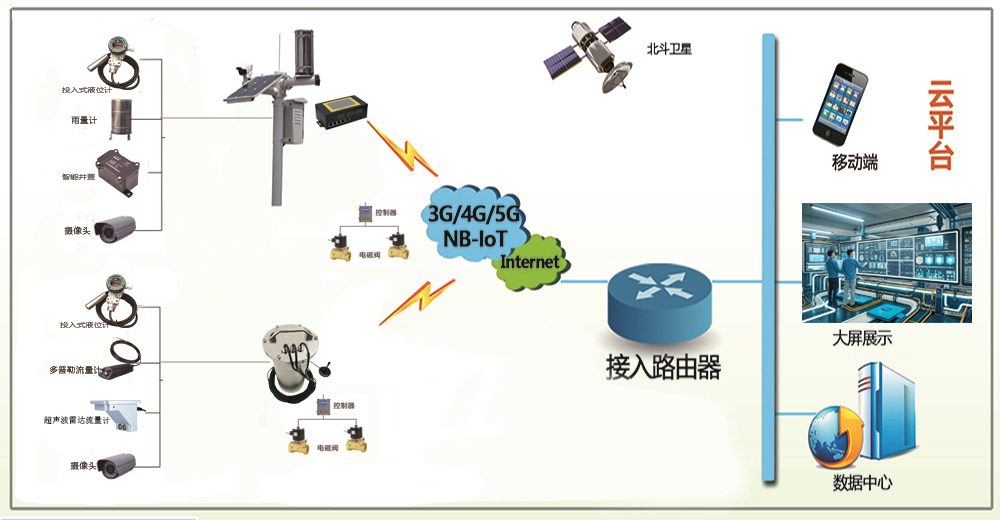
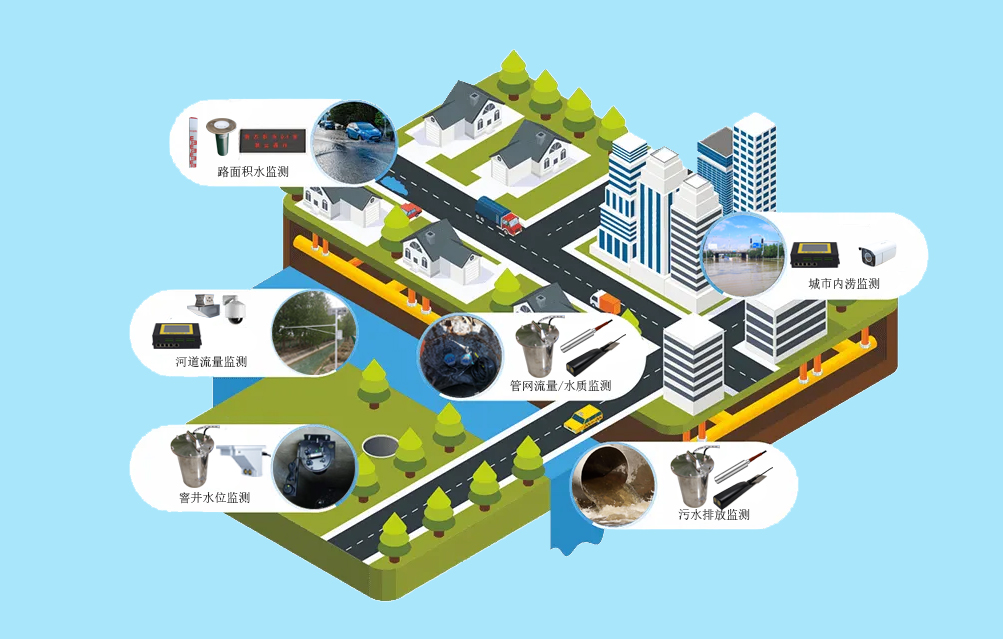
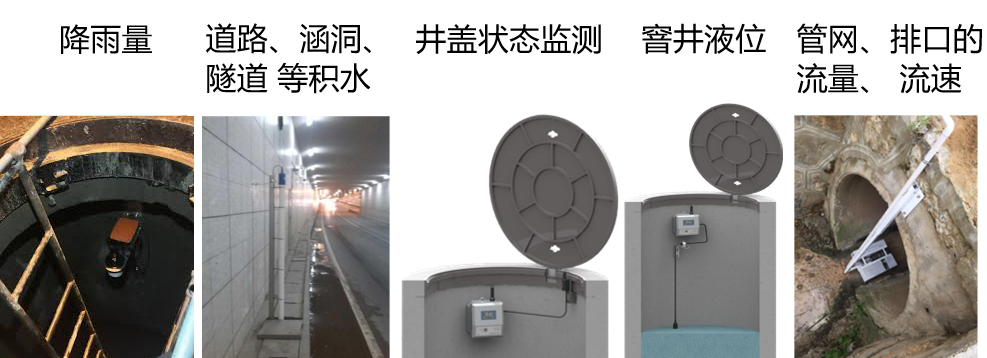
Composed of various types of sensors, including sewage well level monitors, rainwater well level monitors, road waterlogging monitors, electronic water gauges, water quality sensors, and smart manhole covers. It mainly provides up-to-date, real-time, stable, and reliable on-site monitoring data.
Adopts networking methods such as 4G/NB-IoT to realize wireless transmission of monitoring data, ensuring the real-time performance and accuracy of the data.
Serving as the main means of human-computer interaction, it includes functions such as data storage, data query, data visualization, statistical analysis, equipment query and management, early warning and forecasting, alarm and diagnosis services, pipeline distribution query, equipment distribution, and remote scheduling.

The system can monitor parameters such as flow rate and liquid level of the drainage pipe network in real time. When the data exceeds the preset threshold, it immediately triggers the alarm mechanism and notifies the relevant management personnel to take timely response measures.

Data collected by front-end sensing devices is transmitted to the cloud platform via network and other infrastructure, where it undergoes aggregation, integration, cleaning, and storage. This data can be used for subsequent data analysis and decision support.
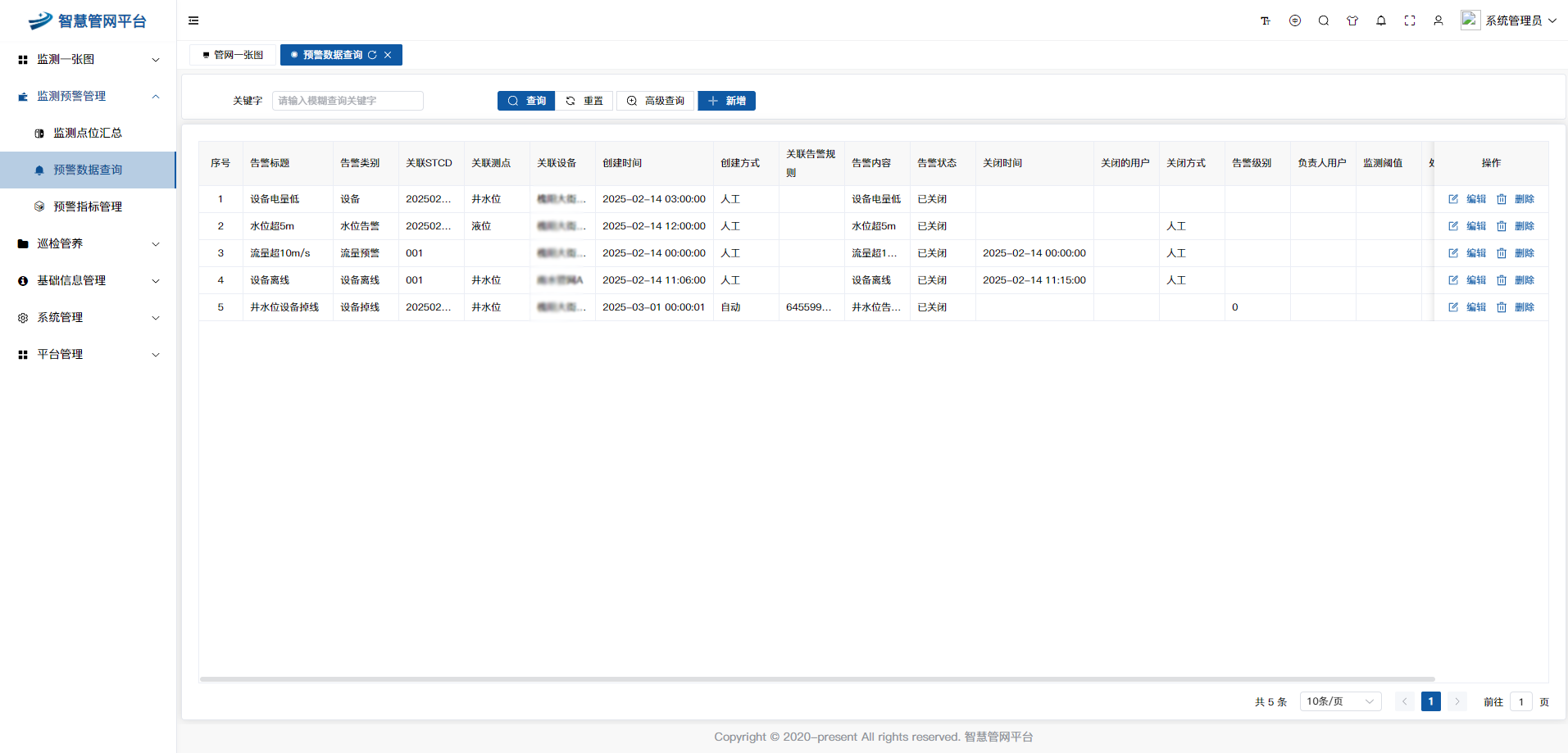
With the help of GIS (Geographic Information System) technology, the system intuitively displays information such as the distribution of monitoring points and real-time status on an electronic map. Users can quickly locate abnormal points through the map and view detailed data, facilitating the overall planning of the pipe network and management decision-making. At the same time, based on data analysis results, the system can also provide a scientific basis for the operation and scheduling, maintenance management, and renovation design of the drainage pipe network.
Users can view monitoring data in real time, receive alarm information, check data analysis charts, and remotely control some devices, enabling remote management of the drainage pipe network.
Pipe Network Safe Operation SupervisionBy monitoring pipe network operating parameters such as flow rate and liquid level, problems in the drainage pipe network—including misconnections, seepage, and water pollution caused by blockages—can be detected in a timely manner.
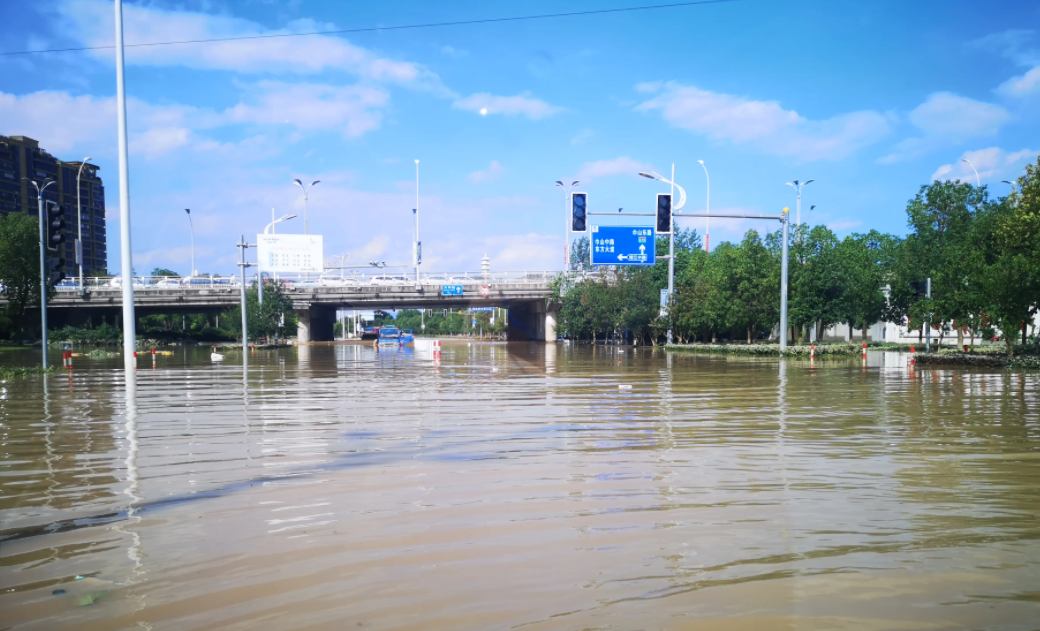
Urban Waterlogging Emergency Command
Before the flood season: Integrate meteorological radar information to issue flood warnings in advance.
During the flood season: Monitor pipeline operating indicators in real time and conduct command and dispatch in accordance with flood control plans.
After the flood season: Complete the evaluation of the emergency response process and provide a knowledge base for subsequent flood control preparation work.
Early Warning for Secondary and Derivative Disasters of Pipe Network Accidents
Based on monitoring data, and combined with drainage pipe network explosion models and road collapse models, timely early warnings are provided for risks such as large-scale explosions caused by the accumulation of flammable gases (e.g., biogas) and road collapse accidents resulting from pipeline leakage.
To summarize, through in-depth analysis of the urban drainage pipe network flow monitoring system and evaluation of its practical application effects, we can clearly see that the system not only plays a crucial role in improving the operational efficiency of urban drainage systems but also demonstrates significant positive impacts across multiple dimensions, including social value, economic value, and environmental value.
Specifically, in terms of social value, it effectively safeguards the quality of life, lives, and property of urban residents, and reduces disaster risks such as waterlogging caused by poor drainage. In terms of economic value, through accurate flow monitoring and data analysis, it helps optimize resource allocation, reduce maintenance costs, and enhance the investment benefits of urban infrastructure. In terms of environmental value, it contributes to reducing water pollution caused by sewage overflow, protecting the ecological environment, and promoting the green and sustainable development of cities.
Therefore, the urban drainage pipe network flow monitoring system is undoubtedly an indispensable and important tool for ensuring urban drainage safety and promoting urban sustainable development. It is also a key measure to improve the efficiency of urban pipe network management decisions and ensure urban drainage safety.